Delivering Impact at Scale: UNDP and Partners Driving Zimbabwe’s Development in 2025
 Francis
In a year marked by global uncertainty, shifting geopolitics, and declining overseas development assistance, UNDP Zimbabwe and its partners delivered tangible, life-changing results for millions of people in 2025. Through strong national leadership, innovative partnerships, and a shared commitment to inclusive development, progress continued across health system strengthening, climate resilience, economic empowerment, and transformative governance—proving that collaboration remains Zimbabwe’s strongest development asset.
These results were achieved through close collaboration with the Government of Zimbabwe and the support of key development partners, including the European Union, UK/FCDO, Government of Ireland, Government of Switzerland, the Government of Japan, the Judith Neilson Foundation; the African Development Bank, the Global Fund, the Green Climate Fund (GCF), and the Global Environment Facility (GEF), as well as close collaborations with technical and implementing partners. Together, these partnerships enabled UNDP to deliver integrated, nationally aligned solutions that respond to Zimbabwe’s development priorities while building long-term resilience.
In delivering the above results, UNDP Zimbabwe strengthened resus-based management through the deployment of an integrated Monitoring & Evaluation dashboard. The dashboard is now used by national counterparts and contributes to UNDP’s regional and global learning on data-driven development delivery.
A Shared Vision for Development
UNDP’s work in 2025 was firmly anchored in Zimbabwe’s national priorities, aligning with the National Development Strategy (NDS) and laying the groundwork for NDS II. Guided by its four-pillar Country Programme framework—People, Planet, Prosperity, and Peace—UNDP worked hand-in-hand with the Government, development partners, civil society, the private sector, and communities to deliver results at scale.
At UNDP Zimbabwe, we believe that partnership is not an add-on—it is the foundation of progress. From ministries and local authorities to bilateral donors, multilateral funds, CSOs, and grassroots organizations, development outcomes were achieved through collective effort.
People: Strengthening Health Systems and Human Development
Zimbabwe’s health sector recorded some of its most significant gains in decades. With strong leadership from the Ministry of Health and Child Care and strategic support from partners such as the Global Fund, Zimbabwe surpassed the global HIV 95-95-95 targets, achieving 97-100-96—placing the country among global leaders in HIV response.
UNDP supported:
• Over 1.2 million people on life-saving antiretroviral treatment
• More than 70% of health facilities have now been digitalized, strengthening both data quality and service delivery. Cumulatively, 1,247 facilities have been reached over the years. The number of digitalized facilities grew from 1,072 in 2024 to 1,215 in 2025.Solar systems were installed in 175 health facilities , bringing the total 1,247 faclities ensuring uninterrupted essential services .
• Education and social protection support for more than 6,000 adolescent girls and young women, including boarding facilities, mentorship, and school retention supportThese achievements demonstrate how resilient health systems, when paired with innovation and partnership, can deliver results even in constrained financing environments.
Planet: Climate Action, Clean Energy, and Resilience
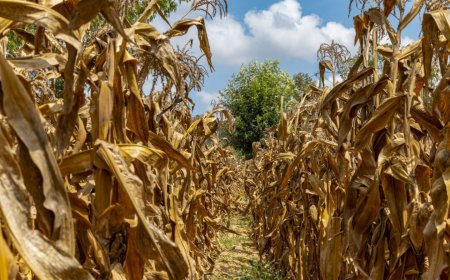
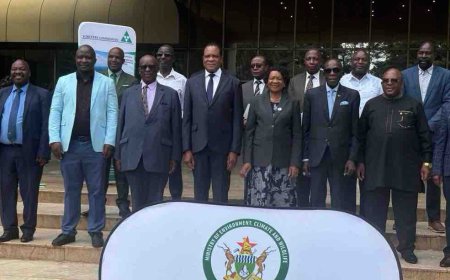
In the face of climate shocks and recurrent droughts, UNDP and its partners, under the leadership of the Ministries of Environment Environment, Climate and Wildlife; Lands, Agriculture, Fisheries, Water and Rural Development; and Energy and Power Development, scaled up solutions that protect lives, livelihoods, and ecosystems.
In 2025, UNDP supported:
• 13.6 MW of solar power installed nationwide, including the world’s largest Solar-for-Health initiative.
• Early-warning climate information now reaches more than 2.6 million people—particularly smallholder farmers—through 65 automated weather and hydrological monitoring stations across 48 districts.
• With thanks to collaboration with CAMPFIRE, EMA, ZimParks and Forestry Commssion, over 300,000 hectares of land placed under conservation in the four Districts of Hurungwe, Mbire, Muzarabani and Kariba, strengthening biodiversity protection and reducing poaching
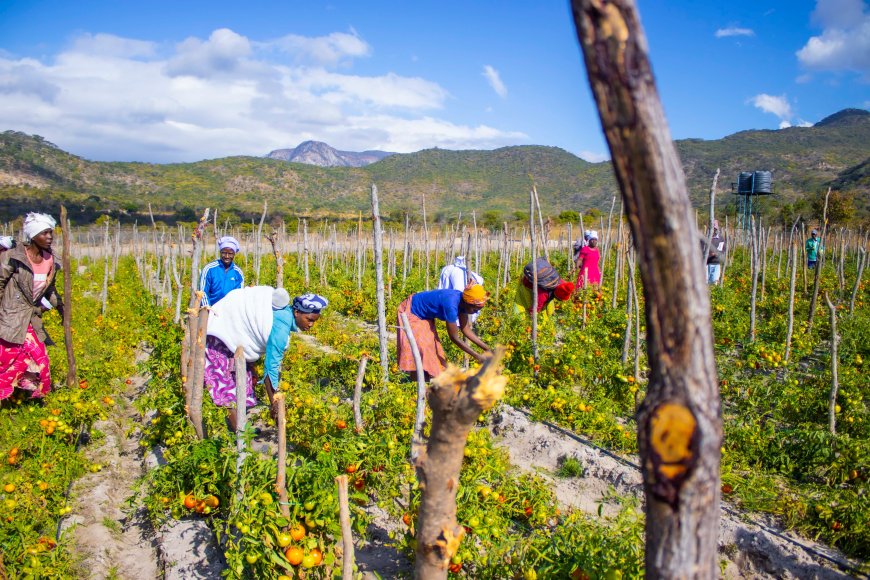
• Six climate-resilient irrigation schemes were completed—four under GCF and two under CAWEP—restoring productivity across 136 hectares of farmland and strengthening food security for [insert number] households.
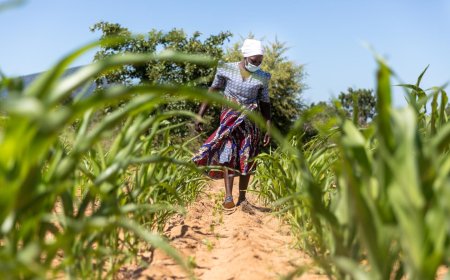
• Climate-smart agriculture innovations, including drought-resistant seeds and livestock breeding programmes
• Launch of the Zimbabwe Biodiversity Finance Programme (BIOFIN)—a major 2025 milestone that formally initiated a national process to mobilize and align public and private finance for biodiversity conservation, laying the foundation for longer-term results through policy reform, investment planning, and innovative financing mechanisms
These interventions are helping communities move from crisis response to long-term resilience—ensuring that climate adaptation is locally grounded, institutionally embedded, and capable of reducing future humanitarian risk while protecting livelihoods and ecosystems at scale.
Prosperity: Empowering Youth, Women, and Local Economies
Economic inclusion remained central to UNDP’s work in 2025. Through targeted support to youth, women, and small enterprises, UNDP helped unlock opportunity where it matters most—at community level.
These achievements were anchored in strong collaboration with our key partners, particularly the Ministry of Women Affairs, Community, Small and Medium Enterprises Development; Ministry of Industry and Commerce; Ministry of Foreign Affairs and International Trade; Ministry of Mines and Mining Development; and the Ministry of Youth Empowerment, Development and Vocational Training. Furthermore, strategic cooperation with ZimTrade and ZNCC was instrumental in driving these initiatives forward.
Key achievements included :
• Support to more than 700 SMEs to leverage opportunities under the African Continental Free Trade Area (AfCFTA)
• Youth innovation and AI challenges, awarding seed funding to emerging entrepreneurs in technology and value-chain development
• Eight Village Business Units (VBUs) were completed, providing integrated solutions—irrigation, solar power, fish farming, and livestock—to strengthen rural economies
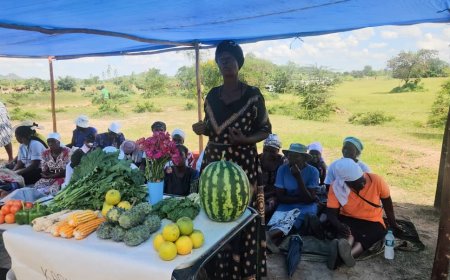
• Over 600 community savings and lending groups, improving access to finance for women and youth
• Advancing fair, transparent, and inclusive taxation through UNDP’s Tax for SDGs and taxpayer education initiatives, strengthening domestic resource mobilization by improving tax knowledge, media reporting, and voluntary compliance—laying the groundwork for sustainable financing of public services and development priorities
These efforts demonstrate how inclusive economic growth can be built from the ground up—turning communities such as Hakwata and Dete into engines of local development, where access to solar-powered irrigation, diversified livelihoods, and community enterprises is creating jobs, strengthening food security, and giving young people and families reasons to stay and invest in their futures, rather than sources of out-migration .
Peace: Strengthening Institutions and Access to Justice
Good governance and social cohesion are essential to sustainable development. In 2025, UNDP deepened its support for institutions and communities to ensure that no one—and no place—is left behind.
This mandate was advanced through our enduring partnerships with the Public Service Commission; Ministry of Justice, Legal and Parliamentary Affairs; and the Ministry of Women Affairs, Community, Small and Medium Enterprises Development. Furthermore, collaboration with the Zimbabwe Gender Commission, Zimbabwe Human Rights Commission, and the Pamuhacha HIV/AIDS Prevention project was critical in strengthening these foundations.
UNDP supported:
• Mobile One-Stop Centres delivering justice, legal aid, and psychosocial services to over 8,500 survivors of gender-based violence
• Participation of 220 persons with disabilities in national dialogues and parliamentary processes
• Digital governance reforms: Through virtual courts, modern land information systems, and citizen-facing digital platforms, UNDP helped expand access to justice, reduce land disputes, and make public institutions more transparent and accessible—especially for women, persons with disabilities, and rural communities.
• Devolution and local governance reforms, improving service delivery and accountability at sub-national level
These interventions are helping build trust, inclusion, and resilience within Zimbabwe’s institutions and communities.
Looking Ahead
As Zimbabwe transitions to NDS II and UNDP prepares for the next Country Programme cycle (2027–2031), the focus will be on consolidation, scale, sustainability, and resilience. Building on proven solutions and strong partnerships, UNDP remains committed to supporting Zimbabwe’s development priorities—shoulder to shoulder with Government and the people of Zimbabwe.
Underpinning this work will be continued investment in strong national systems, including transparent monitoring, learning, and accountability mechanisms that connect local results to national and global development goals.
Because progress is not the work of one institution—but the result of shared purpose, trust, and collective actions from all our national and international partners.