Zimbabwe’s Climate Action Window: A Stakeholder-Driven Leap Toward Resilient Agriculture
 Francis
In a decisive moment for Zimbabwe’s agricultural future, stakeholders from across the country gathered in Harare to validate the Resilient Agriculture Cluster Project (RACP). This national workshop, convened by the African Development Bank (AfDB) and the International Fund for Agricultural Development (IFAD), marked a critical milestone in the country’s climate adaptation journey.
The gathering was not just ceremonial—it was a strategic checkpoint. “We are here to validate the RACP project design in readiness for board presentation in March 2026,” declared the AfDB Country Manager. “We welcome you to actively provide comments and input into this important process.”
A Climate-Resilient Vision Rooted in Urgency
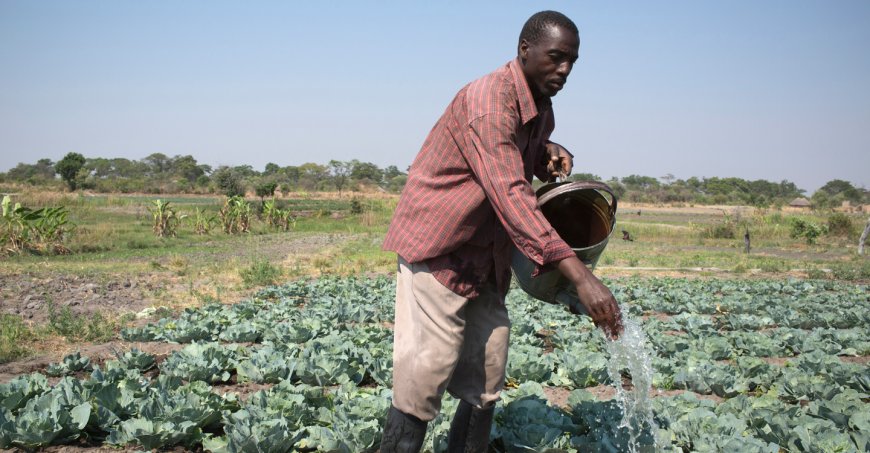
Zimbabwe’s vulnerability to climate change is no longer theoretical. “Climate change is no longer a distant threat,” emphasized IFAD’s representative. “It is a daily reality for millions of smallholder farmers.” The impacts—recurrent droughts, mid-season dry spells, floods—are eroding productivity and threatening food and nutrition security.
The RACP initiative, co-financed by a USD 9.4 million grant and a USD 300,000 technical assistance facility from AfDB’s Climate Action Window, aims to reverse this trend. “Allow me to congratulate the Zimbabwean Government for securing these resources,” said the AfDB Country Manager. “After much preparatory work by Government, assisted by IFAD and Bank staff, we have reached this critical stage.”
Stakeholder Voices: Validation as a Collective Act
The workshop was a convergence of voices: government officials, civil society organizations, farmer groups, media houses, and private sector representatives. Their shared goal? To ensure the project is “strong, sound, and worthy of the people it is meant to serve.”
A handwritten annotation captured the spirit of the day: “The word Validation comes from Latin word VALIDUS—which means strong, sound or worthy.” This wasn’t just linguistic trivia—it was a philosophical anchor. “When we talk about validate,” the note continued, “we are asking ourselves if the project is STRONG, SOUND or worthy of the people it is meant to serve.”
Inclusive Design: From Provincial Consultations to National Consensus
The workshop built on successful provincial consultations held the previous week. “The strong engagement in Bulawayo demonstrated both the urgency of this initiative and the collective commitment to shaping a climate-resilient future,” said IFAD’s Country Manager.
These consultations were not token gestures. They were substantive dialogues where stakeholders shaped the project’s strategic orientation. “Your contributions today will help ensure that RACP delivers inclusive, climate-resilient and impactful outcomes for rural communities across Zimbabwe.”
A Partnership Anchored in Innovation
The collaboration between IFAD and AfDB is more than administrative—it’s transformative. “We greatly appreciate the innovative partnership between IFAD and AfDB,” said the AfDB Country Manager. “It has improved support to the Government of Zimbabwe to address the negative impacts of climate change on the economy and improve livelihoods.”
This partnership is backed by AfDB’s Climate Action Window, part of the ADF 16 cycle. “An initial allocation of USD 429 million was expected to align focus on accelerating climate adaptation action among vulnerable countries in Africa,” the remarks noted.
Four Cardinal Points for Development
The new AfDB President, Dr. Sidi Ould Tah, has outlined four cardinal principles for development interventions:
- Enhanced Access to Capital: Mobilizing Africa’s financial resources.
- Reforming Financial Systems: Consolidating institutions for global agency.
- Harnessing Demographic Transformation: Driving economic development.
- Building Climate-Resilient Infrastructure: Strengthening value addition.
“The RACP project is designed to align with these principles,” the Country Manager affirmed. “Let’s work together to move Zimbabwe forward.”
What’s Next: Implementation with Purpose
With validation complete, the next phase is implementation. Priorities include:
- Improved access to water resources
- Climate-smart agriculture and financial literacy
- Entrepreneurship and value-chain opportunities
- Leadership roles in water management and catchment committees
The workshop concluded with a call to action: “Let me reaffirm IFAD’s strong and enduring commitment to working with the Government of Zimbabwe, AfDB and all partners represented here.”
As Zimbabwe prepares for board presentation in March, the message is clear: climate resilience is not a dream—it’s a shared responsibility.