Zimbabwe's Green Investment: UNDP's GEF-6 Project Fights for the Zambezi's Future
 Francis

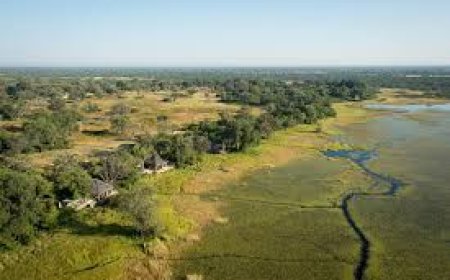
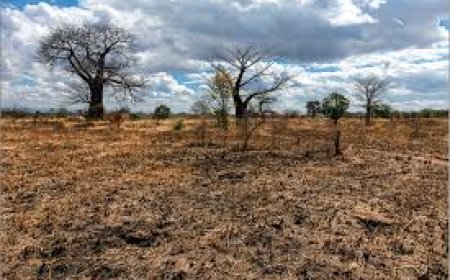
The Mid to Lower Zambezi Valley, a critical biodiversity hotspot, is at the heart of a significant environmental and development effort by the United Nations Development Programme (UNDP) in partnership with the Government of Zimbabwe. The six-year Global Environment Facility (GEF-6) project, officially titled "Strengthening Biodiversity and Ecosystems Management and Climate-Smart Landscapes in the Mid to Lower Zambezi Region of Zimbabwe," has been a key pillar of the country's response to escalating climate change threats, poaching, and land degradation.
Leveraging the framework of the UNDP's upcoming Country Programme Document (CPD) for 2025 onwards, which prioritizes Nature, Environment, and Climate alongside Economic and Transformative Governance, the project's recent performance review underscores both critical achievements and persistent hurdles, offering vital lessons for sustainable development financing.
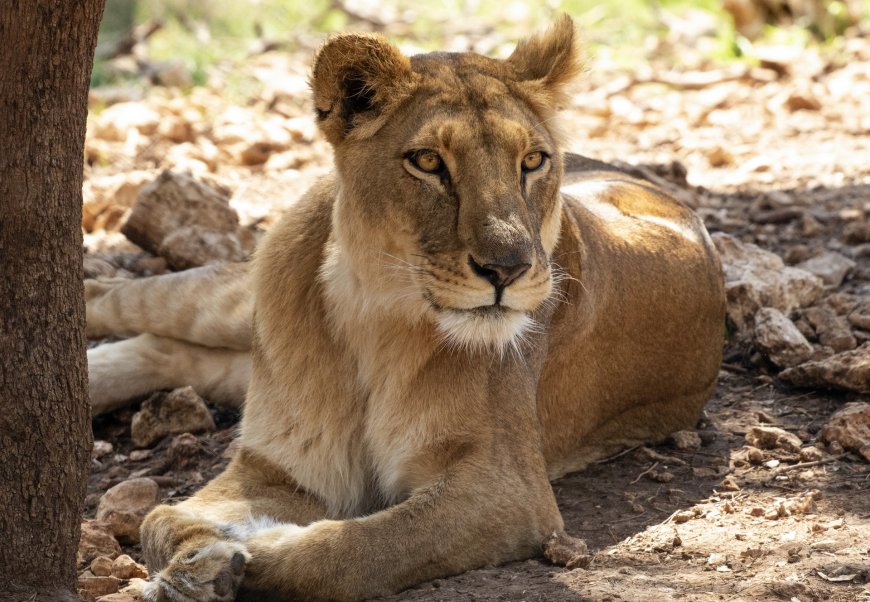
Achievements and Successes: Stabilizing the LandscapeIn line with the goals of the global Sustainable Development Goals (SDGs), particularly SDG 13 (Climate Action) and SDG 15 (Life on Land), the GEF-6 project has demonstrated tangible impacts in the targeted districts of Hurungwe, Mbire, and Muzarabani.Reversing Poaching Trends: A core success has been the stabilization of wildlife populations by reversing poaching trends.
This was achieved through strengthening law enforcement capacity, including the establishment of Multi-Agency Wildlife Crime Units and the provision of advanced tools. The introduction of the Spatial Monitoring and Reporting Tool (SMART) system and the training of rangers in drone technology have been instrumental in improving surveillance and data-driven patrol planning.Climate-Smart Land Management: The project exceeded its carbon sequestration target, mitigating over 1.6 million tonnes of $\text{CO}_2$ equivalent.
This was achieved by successfully putting over 300,000 hectares of landscapes under improved, sustainable natural resource management practices, including woodland restoration and community-based sustainable forest management.Legal and Governance Reforms: Key policy updates were supported, including revisions to the Parks and Wildlife Act and the development of the National Wildlife Policy.
Crucially, the revised Act facilitates communities receiving 100% of Natural Resource Management (NRM) benefits, a move vital for incentivizing conservation (a key element of the Community-Based Natural Resource Management—CBNRM—model).Community Resilience: The project focused on building community resilience through the development of Integrated Landscape Management Plans (ILMPs) and supporting alternative, sustainable livelihood activities via low-value grants.
This directly addresses the need for economic prosperity (SDG 8) linked to conservation.
Challenges and Lessons for the FutureThe project's Mid-Term Review (MTR) and recent management responses from the planned 2024 Annual Review Meeting have highlighted several critical challenges:Funding and Disbursement Delays: The project faced delays in timely disbursement of funds to Low-Value Grant Partners during the initial implementation phase, partly due to operational system challenges (such as limited access to the UNDP QUANTUM system).
This financial bottleneck directly impeded timely project delivery at the community level.Equipment Maintenance: A major sustainability challenge identified is the need for a comprehensive maintenance plan for equipment (vehicles, digital radio systems, etc.) provided to local authorities and game scouts. Without this, assets risk quickly becoming non-functional, undermining long-term capacity building.
Moving from Project to Program:
The Terminal Evaluation recommended a shift from a short-term, component-based project approach to an integrated, sustained program approach. This is crucial for embedding conservation activities within local governance and community structures to ensure longevity beyond the GEF funding cycle.
Funding and Sustainability:
The Fintech AngleThe project, which received a significant financial injection from the GEF with co-financing from the UNDP and the Government of Zimbabwe, directly tackles a major fintech-environment nexus challenge: securing long-term, diverse, and predictable financing for conservation.Innovative Financing: While the primary funding source is traditional GEF/Government, the lessons learned are informing the broader UNDP Zimbabwe strategy, which includes exploring innovative financing mechanisms.
The CPD 2025 framework is likely to further explore instruments like debt-for-climate swaps (as noted in wider UNDP research) and public-private partnerships to mobilize domestic and international private capital for green initiatives.
Self-Sustaining Models:
The move to give communities 100% of NRM benefits, coupled with developing business plans and governance structures for Community Wildlife Conservancies (CWCs), is the critical sustainability lever. This is an attempt to transform conservation from a cost center into a revenue-generating, community-owned enterprise, ensuring that local incentives are fully aligned with biodiversity protection.
A comprehensive sustainability plan for project assets and investments is actively being developed during the project extension phase (August 2024 to August 2025).The GEF-6 project is a strong case study in how targeted, integrated landscape management can deliver on both biodiversity and climate action. Its evolution towards a more program-based, financially sustainable model, as championed in the CPD 2025, will determine the long-term health of the Mid to Lower Zambezi Valley and its communities.