
COP30: A Litany of Promises, and A Mountain of Needs
 Francis

Zimbabwe at a Climate Crossroads: Can COP30's "Implementation" Agenda Reshape a Nation's Future?
HARARE, Zimbabwe – In the wake of the landmark COP30 summit in Belém, Brazil, branded the "Implementation COP," Zimbabwe faces a moment of profound reckoning. The global decisions made under the Amazonian canopy—on finance, forests, and a just transition—will directly test the nation's ability to reconcile its own developmental ambitions with escalating climate vulnerabilities and urgent international expectations.
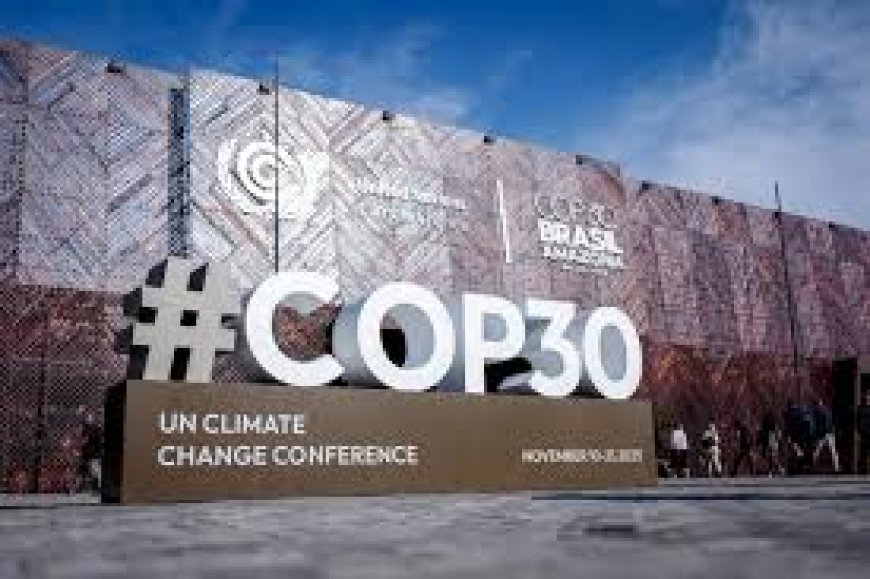
A technical workshop convened this week by the Ministry of Environment, Climate and Wildlife, with UNDP support, laid bare both the immense opportunities and stark tensions embedded in the COP30 outcomes for this Southern African nation. As government officials, civil society, and private sector actors gathered to dissect the summit's 50+ key decisions, the dialogue revealed a critical gap between global ambition and local reality, particularly concerning the nation’s natural resources and energy future.
COP30’s headline financial achievements—the political signal to triple adaptation finance, the Baku-to-Belém Roadmap targeting $1.3 trillion annually by 2035, and the launch of the FINI Initiative to unlock $1 trillion in adaptation projects—were met with cautious hope. “The gap between pledge and disbursement has crippled our planning for a decade,” noted one senior ministry official, speaking on condition of anonymity. “The new Climate Finance Accountability Framework is essential. We need that transparency to hold systems accountable, or these numbers remain a mirage.”
For a country battling cyclical droughts, floods, and a crippling economic situation, the Belém Health Action Plan and the formal establishment of the Just Transition Mechanism (BAM) offer potential lifelines. Yet, questions abound. “How does a ‘just transition’ function in a nation with high unemployment, where mining is a pillar of the economy?” asked a representative from a local environmental justice NGO. “The Belém Gender Action Plan is welcome, but will funds trickle down to women farmers in Buhera or Binga who are already adapting with no support?”
The most pointed discussions centered on energy and extraction. COP30’s failure to secure a “fossil fuel phase-out” in the final text, despite the historic First Fossil Fuel Phase-Out Conference being announced for Colombia in 2026, created a stark dissonance with Zimbabwe’s domestic trajectory.
This comes as Zimbabwe aggressively expands its fossil fuel footprint, notably through new coal mining concessions and exploration, while simultaneously championing its vast lithium reserves for the global green energy transition. “We are promoting ‘Green Industrialisation’ per the Belém Declaration with one hand, while locking in fossil infrastructure with the other,” observed an energy analyst at the workshop. “The Presidency Roadmaps Brazil will develop on fossil transition are a direct challenge to our policy coherence.”
The contrast with regional leadership was noted. South Korea’s new commitment to phase out coal by 2040 and Colombia’s declaration making its Amazon oil- and mining-free stand in sharp relief. “Where is Zimbabwe’s roadmap?” pressed a youth climate delegate. “We see Utilities for Net Zero (UNEZA) committing trillions globally, but here we are deepening dependency. Are we preparing for the world that is coming, or clinging to the past?”
On nature, COP30 presented both a model and a mandate. The groundbreaking $6.7 billion Tropical Forests Forever Facility (TFFF), which pays countries for verified conservation, and the $1.8 billion Indigenous Land Rights Pledge offer a potential blueprint. Zimbabwe’s communally owned forests and landscapes could be candidates for such performance-based finance, but this demands robust governance and clear land tenure—areas of historical contention.
“The Belém Call to Action for the Congo Basin asks us to halt deforestation by 2030,” said a forestry expert. “We have our own targets, but the driver is often poverty and energy need. The Sustainable Wood Coalition and Resilient Agriculture Investment (RAIZ) initiative must be tailored to provide real alternatives for communities, not just restrictions.”
The private sector, particularly mining and agriculture, faces new pressure. Initiatives like the Open Coalition on Carbon Markets aim to curb greenwashing, while the Sustainable Cattle Programme in the Amazon sets a traceability standard. “The Global Implementation Accelerator and Maloca Platform can help us design better projects,” said a representative from an agricultural consortium. “But accessing the Circle of Finance Ministers dialogue or the $20 billion Water Investment Programme requires capacity we are still building.”
With over 122 updated NDCs submitted at COP30 and the baton passed to Turkey for COP31, Zimbabwe’s immediate task is its own NDC 3.0. The workshop’s “roadmap to COP31” must now integrate a dizzying array of new global metrics: the 59 voluntary indicators for the Global Goal on Adaptation, the Urban Climate Governance plan for cities, and the Information Integrity Declaration against misinformation.
“COP30 was about tools and frameworks for implementation,” concluded Dr. Ayodele Odusolo, UNDP Resident Representative, in his remarks. “The ‘Global Mutirão’ spirit—collective action—is not optional. For Zimbabwe, implementing NDC 3.0 means aligning every sectoral policy, every infrastructure investment, with the Belém Mission to 1.5°C. It means viewing climate action not as a cost, but as the only viable pathway to resilient development.”

The story emerging from Harare is not unique, but it is urgent. Zimbabwe, rich in both climate-vulnerable communities and climate-critical minerals, sits at the nexus of the world’s most pressing dilemmas. The “Implementation COP” has handed it a sophisticated new toolkit. Whether the nation uses it to build a bridge to a sustainable future or continues to navigate a perilous path of contradiction will be one of the defining African climate stories of the coming decade. The world, now watching supply chains and carbon sinks with equal intensity, is waiting to see which road Zimbabwe takes.