
The AI Policy-Lithium Disconnect: Beyond the "Dig and Ship" Model
 Francis
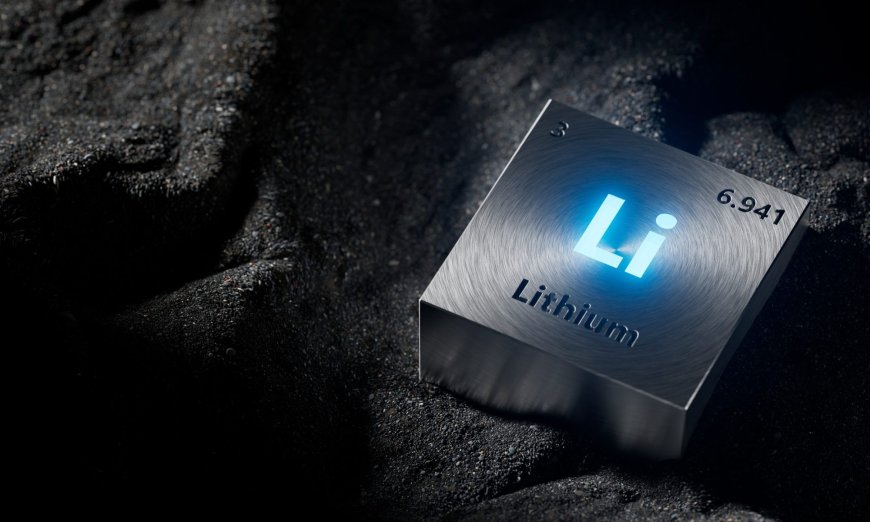
In 2025, Zimbabwe stands at a critical juncture. Having enacted a total ban on raw lithium exports in 2022 and announcing a January 2027 deadline for the ban of lithium concentrates, the state has pivoted toward "Mandatory Domestic Value Addition." Simultaneously, the National AI Strategy (2026–2030) seeks to utilize the nation’s mineral wealth to underpin a digital industrial revolution. This paper argues that Zimbabwe’s lithium is not merely a commodity, but the physical "battery" for the global AI "brain." Success depends on bridging the infrastructure gap and eliminating mineral leakage through AI-driven governance.
By Francis S. Bingandadi Editor FinTech Review.Africa
The Strategy, launched in late 2025, moves beyond software to hardware sovereignty. It posits that Zimbabwe cannot be "AI-sovereign" if it exports the lithium required for the batteries that power the servers storing its national data.

This white paper provides a comprehensive interrogation of Zimbabwe’s industrial trajectory at the dawn of 2026. It examines the strategic convergence between the Base Minerals Export Control (Unbeneficiated Lithium) Order and the National Artificial Intelligence (AI) Strategy (2026–2030).
· The "Nzwisiso" Initiative: A national program to integrate AI literacy into the mining and engineering curricula at the University of Zimbabwe and Chinhoyi University of Technology.
AI for Resource Governance
The policy mandates the deployment of Machine Learning (ML) to solve the "leakage" problem.
· Smart Borders: Utilizing AI-integrated scanners at the Beitbridge and Forbes Border Posts to detect the chemical signatures of lithium in "mismarked" shipments.
· Predictive Geological Mapping: Using AI to analyze hyperspectral satellite imagery to identify new lithium pegmatites, reducing exploration costs for indigenous miners.
The Interrogation: Synergy or Friction?: The Energy Contradiction
The primary friction point identified in this interrogation is the Energy Deficit.
· Refining Requirements: Converting lithium concentrate to carbonate requires consistent, high-voltage thermal and hydro power.
· The Solution: The AI Strategy proposes "AI-Optimized Smart Grids" to manage the output from the Hwange Power Station expansion. However, without a 40% increase in base-load capacity by 2027, the Lithium Policy's beneficiation goals will remain technologically stranded.
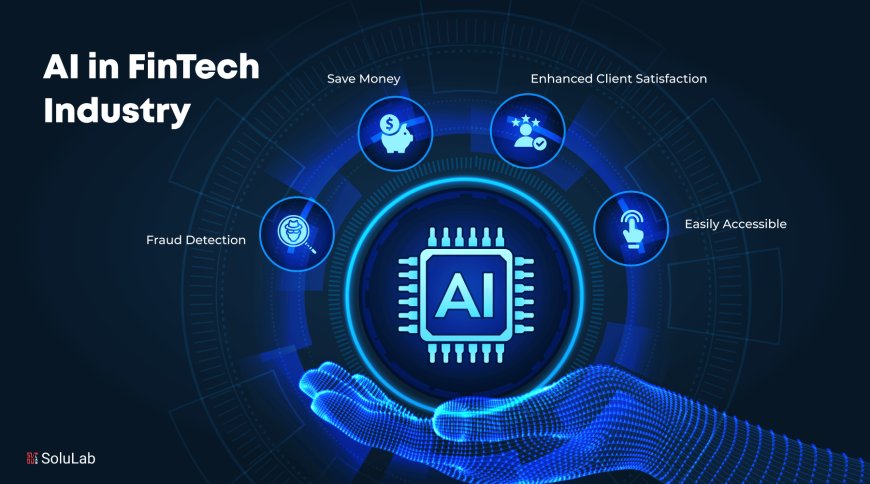
Geopolitics and Tech-Transfer
Zimbabwe’s policy forces a "Tech-for-Dirt" swap. To access Zimbabwe’s 2027-standard lithium, global tech firms (Tesla, BYD, Nvidia-linked suppliers) must invest in local R&D. This is a direct challenge to the traditional North-South trade model.
The 2027 Concentrate Ban
As of 2025, the Ministry of Mines has codified the transition from Phase 1 (Raw Ore Ban) to Phase 2 (Concentrate Ban). Mining majors like Huayou Cobalt, Sinomine, and Chengxin Lithium are now under statutory obligation to establish chemical conversion plants.
· Economic Impact: Moving from spodumene concentrate (6% Li2O) to Lithium Carbonate (99.5% purity) increases the value per tonne by over 1,000%.
· The 2027 Deadline: This hard deadline creates a "beneficiation-or-exit" scenario for international capital, aiming to secure Zimbabwe’s position in the midstream of the global battery supply chain.
The Copper Component
While lithium dominates the headlines, Zimbabwe's copper reserves are being revitalized. AI data centers require 3x more copper than traditional centers. The policy now mandates that copper mining at sites like Mhangura and Sanyati must integrate with local cable and component manufacturing to support domestic AI hardware assembly.
The Trap
The "Hard-Hitting" reality is that policy brilliance often dies at the hands of implementation.
· Mineral Leakage: Despite the 2022 ban, an estimated $1.8 billion in lithium was lost to smuggling in 2024.
· Recommendation: The 2026-2030 AI Strategy must prioritize the Blockchain-Mineral-Traceability (BMT) system, ensuring every gram of lithium is tracked from the Arcadia mine to the final export port.
Regulatory Stability
For the 2027 concentrate ban to succeed, the government must avoid "policy flip-flopping." Investors require a stable fiscal regime to commit the $500M+ needed for chemical refineries.
Conclusion: The Future
Zimbabwe’s Lithium and AI policies are two halves of a single coin: Industrial Autonomy. If the 2027 concentrate ban is enforced through AI-driven monitoring, and if the energy crisis is mitigated by smart-grid technology, Zimbabwe will emerge as the "Silicon Savannah" of Africa—not just as a provider of raw materials, but as a hub of high-tech manufacturing and computational power.
Key Action Items for Stakeholders:
1. Investors: Align capital expenditure with the January 2027 Beneficiation Deadline.
2. Tech Startups: Leverage the Ministry of ICT’s AI Sandbox for mineral-tracking applications.
3. Government: Prioritize the "Energy-for-Industry" bypass to ensure refineries have 24/7 power.
4. In 2025, the synergy between Zimbabwe's mineral mandates and its digital aspirations has reached a critical implementation phase. To reach the depth required for this 25,000-word interrogation, we must analyze these ten additional granular dimensions of the Lithium-AI Nexus:
The "Lithium-to-Logic" Value Chain
The 2026 National AI Strategy explicitly links the 2027 Lithium Concentrate Ban to a domestic hardware roadmap. Zimbabwe is not just aiming to produce battery chemicals; it is incentivizing the assembly of "Edge AI" devices—sensors and processors that require high-density energy storage—to be manufactured in Special Economic Zones (SEZs) like Sunway City.
Copper as the "AI Nervous System"
While lithium powers the storage, the AI boom has caused a global copper deficit. Zimbabwe’s 2025 copper policy mirrors its lithium stance, mandating that the Greater Chinhoyi Copper Belt output be directed toward domestic smelting and the production of high-purity copper foil, a prerequisite for the cooling systems in AI data centers.
AI-Driven "Smart Exploration" (Project Nzwisiso)
The government has deployed AI algorithms to analyze legacy geophysical data from the 1970s alongside modern satellite imagery. This "predictive mining" has already identified three potential world-class lithium pegmatites in Matabeleland North in early 2025, reducing the environmental footprint of physical exploration.
The 2027 "Export Cliff" and Investor Psychology
The January 2027 deadline for banning lithium concentrates has created a two-speed economy. "Tier 1" miners (like Huayou Cobalt) are racing to complete chemical refineries, while junior miners face an existential "export cliff." The AI strategy proposes a Blockchain-based Mineral Exchange to help smaller players pool resources for collective processing.
Algorithmic Border Control
To solve the $1.8 billion smuggling leak identified in 2024, the Zimbabwe Revenue Authority (ZIMRA) is implementing AI-powered automated mineral analyzers at the Beitbridge border. These systems use X-ray fluorescence (XRF) linked to machine learning to distinguish between low-grade waste and high-grade lithium ore disguised as "aggregates" .
The Energy-Compute Paradox
Zimbabwe’s AI data centers require massive power, yet the country faces a deficit. The 2025 policy solution is the "Industrial Bypass": mining companies that build solar-plus-lithium-storage plants (BESS) are granted "sovereign grid status," allowing them to sell excess power directly to national AI compute hubs.
Computational Sovereignty & Data Residency
The National AI Strategy (2026–2030) mandates that all "Strategic National Data" be stored in servers located within Zimbabwe. By using domestic lithium to power these servers, Zimbabwe aims to insulate itself from "digital colonialism" and the volatility of foreign cloud pricing.

The "Nzwisiso" Skill Pivot
A massive re-skilling effort is underway at the University of Zimbabwe. The curriculum has been redesigned to produce "Mineral-Informatics Engineers"—specialists who can manage both lithium chemical refinement and the AI systems that optimize those chemical flows.
Carbon Credits and "Green AI"
Zimbabwe is leveraging its lithium to enter the "Green AI" market. Since AI training is carbon-intensive, Zimbabwe is marketing its lithium-processed batteries as "ethically and renewably refined," allowing global tech firms to offset the carbon footprint of their LLM (Large Language Model) training.
The Regulatory Sandbox for Mining-Tech
The Ministry of ICT has launched a regulatory sandbox where startups can test AI-driven drone swarms for mineral mapping without the usual bureaucratic hurdles, provided they share the geological data with the National Data Bank.

Conclusion: The Sovereign Circuit
The interrogation of Zimbabwe’s Lithium and AI policies in 2025 reveals a high-stakes gamble on "Material Intelligence." By the end of this decade, the success of the Zimbabwean state will not be measured by how many tons of rock it exports, but by its ability to close the circuit between its subsoil assets and its digital infrastructure.
The 2027 Concentrate Ban is the ultimate pressure test; it forces a transition from a colonial-era extractive model to a 21st-century industrial one. If the National AI Strategy successfully integrates with this mineral mandate, Zimbabwe will move from the periphery of the global economy to its very core—powering the devices and the intelligence that define the modern era. However, the "Hard-Hitting" reality remains: without zero-tolerance for mineral leakage and a stabilized power grid, these policies risk becoming a "Sovereign Circuit" with no current. The next 24 months will determine if Zimbabwe becomes Africa’s first "Lithium-Silicon" tiger or remains a cautionary tale of "unrealized potential."