UNDP Spurs Rural Economic Engine: Village Business Units Drive Income and Resilience
 Francis
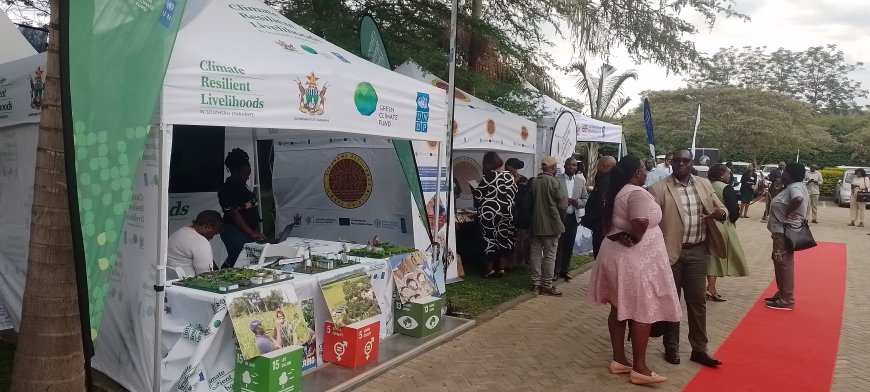
The United Nations Development Programme (UNDP) is making a significant investment in Zimbabwe’s rural economy through the innovative Village Business Units (VBUs) Programme, directly aligning with the priorities of the UNDP Country Programme Document (CPD) 2022-2026 to enhance economic opportunities and build climate-smart solutions. These community-managed enterprises are transforming subsistence farmers into commercial producers, acting as critical engines for rural industrialization.
The Village Business Units Programme is a multi-partner initiative focused on developing resilient, productive livelihoods in vulnerable communities, particularly under UNDP's Nature, Climate, and Energy and Economic Governance programmatic pillars. The core strategy is to couple essential climate-resilient infrastructure with entrepreneurial capacity building at the village level.
While the total, single-project investment figure for the broad VBU initiative is aggregated across several programmes, a key pillar of UNDP's support is derived from the Green Climate Fund (GCF) project, "Building Climate Resilience of Vulnerable Agricultural Livelihoods in Southern Zimbabwe." This project alone saw an expected disbursement of US$4 million towards climate-proofing and revitalizing equipment in irrigation schemes, which directly supports the VBU model.
The UNDP’s contribution is primarily channeled through the provision of multiple-water-use systems that are crucial for the establishment and sustainability of the VBUs:
Solar-Powered Boreholes: The deployment of solar technology ensures a reliable, year-round water supply for irrigation and household use, even during severe drought periods. This energy self-sufficiency is fundamental to commercial viability.
Irrigation Schemes: UNDP, in partnership with other stakeholders, has been instrumental in revitalizing hundreds of hectares of idle land into climate-proofed irrigation plots. For example, one component of the broader resilience-building work reported 400 more hectares of climate-smart irrigation, enabling continuous productivity for communities. This infrastructure allows VBUs to move beyond rain-fed agriculture and diversify into high-value horticultural crops.
A specific testimonial highlights the successful integration of these components: a VBU in Nyanga District, established with UNDP support under the Zimbabwe Resilience Building Fund (ZRBF), is designed to move over 60 households beyond subsistence to commercial production, fostering both food security and income generation.
The Village Business Units are a prime example of a scalable downstream intervention—a key delivery mechanism outlined in the UNDP CPD 2022-2026. The programme directly addresses the CPD's goal of enhancing economic opportunities by fostering self-reliance and local economic growth.
Job Creation and Dividends: The VBU model is structured to function as a cooperative business, where community members are both employees and shareholders. Beneficiary households earn a regular income, with some models designed to provide an average dividend, significantly boosting rural livelihoods. This model is integral to the Government's Presidential Rural Development Programme and the national mantra of "leaving no one and no place behind."
Value Addition and Local Economic Growth: The units are not limited to crop production. They facilitate value-addition centres for various products (e.g., honey, dried fruits) and encourage entrepreneurial skill-building. This diversification strengthens local economies and reduces dependency on single agricultural commodities, increasing the resilience of rural communities to economic shocks.
Empowering Vulnerable Groups: Crucially, the VBU structure emphasizes gender equality and inclusion, empowering marginalized groups like women, youth, and persons with disabilities. The move from strenuous manual borehole pumping to simple solar-powered taps, as reported by beneficiaries, has reduced the burden on women and the elderly, ensuring greater participation in the business unit operations.
By linking rural communities to markets, strengthening their assets, and embedding climate-smart solutions, the UNDP’s investment in Village Business Units is generating tangible economic results, making a substantial contribution to Decent Work and Economic Growth (SDG 8) and Climate Action (SDG 13), thereby fulfilling the strategic objectives of the current Country Programme Document.
The Village Business Unit - Nyanga video shows a specific VBU project supported by UNDP, which is a tangible example of the investment in rural economic resilience discussed in the article.