Zimbabwe Launches Livestock Climate Action Project to Reduce Methane Emissions and Boost Resilience
 Francis
Harare, Zimbabwe - The Food and Agriculture Organization (FAO) of the United Nations, in collaboration with the Government of Zimbabwe and the Climate and Clean Air Coalition (CCAC), has launched a project to enhance national livestock and climate policies with short-lived climate pollutants mitigation in the extensive beef sector.
The project, titled "Enhancing National Livestock and Climate Policies with Short-Lived Climate Pollutants Mitigation in the Extensive Beef Sector in Zimbabwe," is funded by the CCAC with a grant of USD 400,000 and will run from December 2025 to December 2027.
Speaking at the launch, Patrice Talla Takoukam, FAO Representative in Zimbabwe and Subregional Coordinator for Southern Africa, emphasized the importance of climate-smart strategies to strengthen productivity while reducing emissions in the livestock sector. "Sustainable livestock systems can be a significant player in the fight against climate change, poverty, and food insecurity," he said.
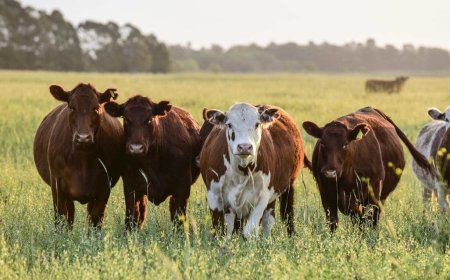
The project aligns with Zimbabwe's National Development Strategy 2 (NDS 2) and Vision 2030, which prioritize strengthening climate resilience, improving agricultural productivity, and transitioning towards an upper-middle-income economy. The livestock sector contributes up to 43% of agricultural GDP and provides income, nutrition, and an economic safety net for over 60% of rural households who own cattle.
However, unsustainable livestock practices contribute to short-lived climate pollutants, particularly methane, which has a significant impact on climate change. The project aims to mitigate these emissions while improving productivity and profitability.
The launch event also featured the presentation of the "Report on Livestock Climate Action in Zimbabwe," which provides evidence-based insights to complement the Agriculture, Food Systems and Rural Transformation Strategy.
Professor Obert Jiri, Permanent Secretary for the Ministry of Lands, Agriculture, Fisheries, Water and Rural Development, emphasized the government's commitment to climate action. "We recognize the importance of climate-smart agriculture in achieving our development goals and reducing emissions," he said.
The project will focus on enhancing government capacity on the MRV framework to integrate short-lived climate pollutant reduction targets into policies, strengthening collaborative efforts, and promoting innovative technologies and strategies for reducing enteric methane emissions.
The FAO and its partners will work with stakeholders to identify opportunities and best practices for climate-resilient livestock systems, explore innovative technologies, and assess the potential impacts of climate change on livestock systems.
The project is expected to generate more income for farmers through carbon markets and contribute to Zimbabwe's Nationally Determined Contributions (NDC) under the Paris Agreement.
The launch event brought together representatives from government bodies, research institutions, civil society organizations, academia, finance institutions, the private sector, and international partners.
Takoukam emphasized the importance of multi-stakeholder collaboration and knowledge-sharing to enhance Zimbabwe's climate action plans within the livestock sector. "Our collective actions today and in the years ahead will determine the success of our shared ambition: a sustainable, resilient, and climate-smart future for Zimbabwe's livestock sector," he said.
The project is part of the FAO's broader efforts to support Zimbabwe's climate action and sustainable development goals.
Background
- The livestock sector contributes up to 43% of agricultural GDP in Zimbabwe.
- Over 60% of rural households own cattle, which provides income, nutrition, and an economic safety net.
- Zimbabwe has committed to reducing methane emissions in its Nationally Determined Contributions (NDC) under the Paris Agreement.
- The project is funded by the Climate and Clean Air Coalition (CCAC) with a grant of USD 400,000.
- The project will run from December 2025 to December 2027.
Contact
- Patrice Talla Takoukam, FAO Representative in Zimbabwe and Subregional Coordinator for Southern Africa, mailto:patrice.takoukam@fao.org
- Ministry of Lands, Agriculture, Fisheries, Water and Rural Development, mailto:info@agriculture.gov.zw