Unpacking the New OSH Bill: New OSH Bill to Replace Three Acts, Give NSSA Prevention Powers
 Francis
GWERU – Zimbabwe’s proposed Occupational Safety and Health (OSH) Bill will repeal the Factories and Works Act of 1951 and the Pneumoconiosis Act, consolidating all workplace safety laws into a single statute that also empowers NSSA to enforce prevention measures, a legal officer has said.
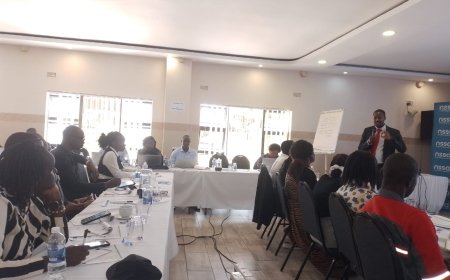
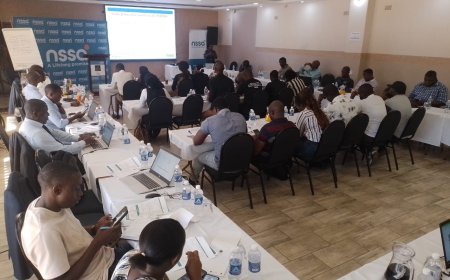
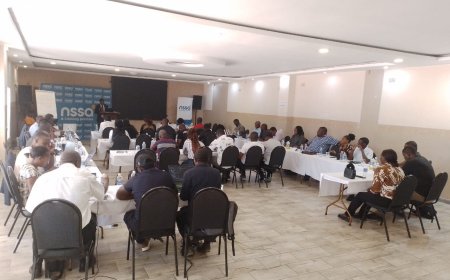
Ms. Memory Mukapa, Legal Officer at the National Social Security Authority (NSSA), told journalists and stakeholders at The Village conference centre in Gweru that the current legal framework is fragmented, comprising three separate Acts and eight sets of regulations.
“Right now you have three Acts, eight sets of regulations. It’s a maze. The new OSH Act is one Act,” Mukapa said. She added that the new law will cover all workers, including those in full‑time, part‑time, remote, and gig economy employment.
The existing laws, Mukapa explained, include the NSSA Act [Chapter 17:04] together with Statutory Instrument 68 of 1990, the Factories and Works Act of 1951, the Pneumoconiosis Act of 1971, and the National OSH Policy of 2014. Zimbabwe has also ratified several ILO Conventions – C155, C161, C167, C170 and C176 – which have not been fully domesticated.
“The old laws pay after the blood. The new Bill says: prevent the blood,” Mukapa said, outlining the first objective of the proposed legislation. The Bill seeks to eliminate occupational accidents, injuries, diseases and fatalities, and to promote occupational safety and health proactively.
A second objective, she said, is to broaden the scope of OSH oversight. “Those C155 numbers? Mental health, ergonomics, worker consultation – now they’re Zimbabwean law, not just Geneva talk,” Mukapa stated, referring to alignment with ratified ILO conventions.
Under the new Bill, all workplaces will be covered, including home offices and delivery vehicles. “Your kitchen table, your WhatsApp group, your delivery bike. If work happens, OSH applies,” Mukapa said. Employers will be required to assess remote work environments.
The Bill establishes a dedicated Occupational Safety and Health Department within NSSA, which Mukapa described as “NSSA’s teeth,” with powers to enter premises, test equipment, and shut down operations before accidents occur. It also creates the Zimbabwe Occupational Safety and Health Council (ZOSHC), a tripartite body comprising government, employers, and workers.
Currently, NSSA’s role is limited to compensation. Under the new Bill, the authority will administer prevention, compensation, and enforcement. “Part of what you pay NSSA will be ring‑fenced for prevention. Training, inspections, SME support. Not just compensation,” Mukapa said. Penalties will also increase significantly from the current fines that can be as low as $20.
Summing up the shift, Mukapa gestured to the NSSA logo – “A life‑long promise” – and said: “The old Acts kept NSSA’s promise after harm. The new Bill moves the promise forward. It starts before the harm. With your risk assessment, not a claim form.” The Bill, once enacted, will repeal the Factories and Works Act and the Pneumoconiosis Act while retaining all substantive safety provisions in a modernised framework.