Government of Zimbabwe and UNDP Delivers Major Water and Energy Overhaul for Binga Schools and Clinics
 Francis
0
41
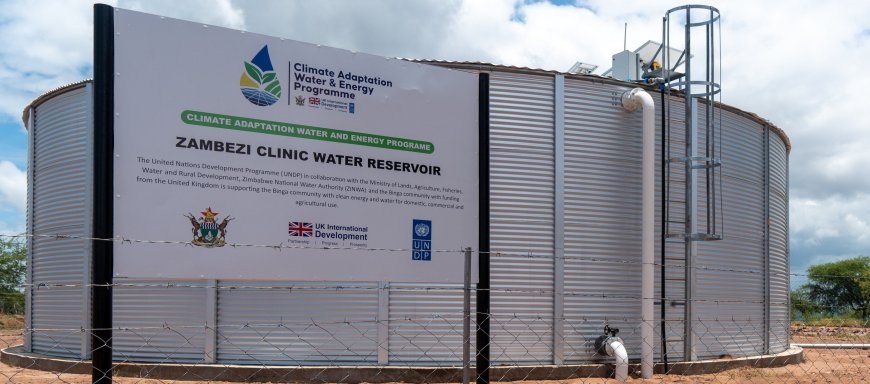
The Government of Zimbabwe, in collaboration with the United Nations Development Programme (UNDP) and the United Kingdom Government, has delivered a massive infrastructure overhaul in Binga District. This initiative, part of the Climate Adaptation, Water and Energy Programme (CAWEP), focuses on the total rehabilitation of a 65-kilometre water pipeline managed by the Zimbabwe National Water Authority (ZINWA).
The project marks a significant turning point for a region that has struggled with erratic water access for nearly three decades, aiming to provide a permanent solution to historical supply deficits.
For the first time in decades, thousands of families are receiving clean, reliable water directly to their homes, clinics, and schools. At Siansundu Clinic, the taps flow again.
“In the labour ward, water is essential for cleaning, sanitation, and infection control. Now we can safely conduct deliveries and maintain hygiene for both staff and patients. It has changed everything,” Muzamba said.
Running water is now available throughout the entire facility, from nurses’ residences to examination rooms. The improvements have strengthened infection prevention and control, reduced delays in care, and enhanced the safe administration of medication for vulnerable patients.
This intervention is not just transforming healthcare. Ten schools connected to the upgraded pipeline now have access to clean water and solar energy, significantly improving the learning environment.
At Bunsiwa Primary School in Siachilaba, School Development Committee Chairperson Leonard Mudenda describes the change as life-changing.
“For the first time, learners and teachers have access to clean drinking water at school. Sanitation has improved and the learning environment is now healthier,” he said.
In Binga, one of Zimbabwe’s most climate-vulnerable districts, clean water and renewable energy have become powerful tools for restoring dignity and resilience.
The technical scope of the project involved the comprehensive repair and modernisation of the ZINWA pipeline, which now serves thousands of households across the district. Beyond residential use, the restored flow of piped water has been integrated into essential public institutions, including government administrative offices and local business centres. This infrastructure serves as a primary pillar for the region’s climate resilience strategy, ensuring that water scarcity no longer hinders the socio-economic development of this often-marginalised community.
In the health sector, the impact is most visible at the Siansundu Rural Health Centre, where the restoration of reliable water has revolutionised clinical operations. Previously, the facility faced immense hurdles in maintaining basic sanitation and infection control protocols due to the lack of running water. With the new pipeline, the clinic now meets international safety standards for medical procedures, particularly in the maternity ward. The availability of clean, on-site water ensures that childbirth is conducted in a sterile environment, drastically reducing the risk of neonatal and maternal infections.
The education sector has seen a parallel transformation, with ten schools across the district now benefiting from the dual provision of clean water and solar energy. Under the CAWEP framework, these institutions have been equipped with renewable energy systems to power classrooms and administrative blocks. This integration of green technology ensures that learning is no longer interrupted by power outages or the physical burden on students to fetch water from distant sources. The result is a modernized learning environment that supports both digital literacy and student health.
The partnership leverages funding from the UK Government’s Foreign, Commonwealth & Development Office (FCDO) and technical oversight from the UNDP to align with Zimbabwe’s National Development Strategy (NDS1). By focusing on Binga, the project addresses specific regional vulnerabilities exacerbated by climate change, such as prolonged droughts that have historically dried up local boreholes. The transition to a robust, piped system provides a more stable alternative to ground-water reliance, which is increasingly under threat from shifting weather patterns.
Sanitation and hygiene standards have improved district-wide as a direct consequence of the consistent water supply. Public institutions that once operated with limited or no flushing systems have been refurbished to utilise the new water source, significantly lowering the threat of waterborne diseases like cholera and typhoid. This systemic improvement in public health infrastructure is expected to lower the long-term healthcare costs for the district and improve the overall quality of life for residents.
From an economic perspective, the availability of water and solar energy is expected to stimulate local growth and entrepreneurship.
Small-scale businesses and agricultural projects in Binga now have the foundational utilities required to scale their operations. The reliability of these services encourages private investment in the district, as the basic overhead risks associated with utility shortages have been mitigated. This aligns with the broader goal of rural industrialisation, turning Binga into a more self-sustaining economic hub.
The successful implementation of this project serves as a model for multi-lateral cooperation in climate adaptation. By combining the local jurisdictional authority of the Zimbabwean government with international funding and technical expertise, the CAWEP initiative has delivered a high-impact solution to long-standing infrastructure gaps. As the 65-kilometre pipeline begins full-scale operation, the focus now shifts to the long-term maintenance and community management of these assets to ensure the benefits endure for future generations.