Power, Money, and Mandates: How Zimbabwe’s Climate Governance Framework is Reshaping National Policy
Power, Money, and Mandates: How Zimbabwe’s Climate Governance Framework is Reshaping National Policy
 Francis
0
3
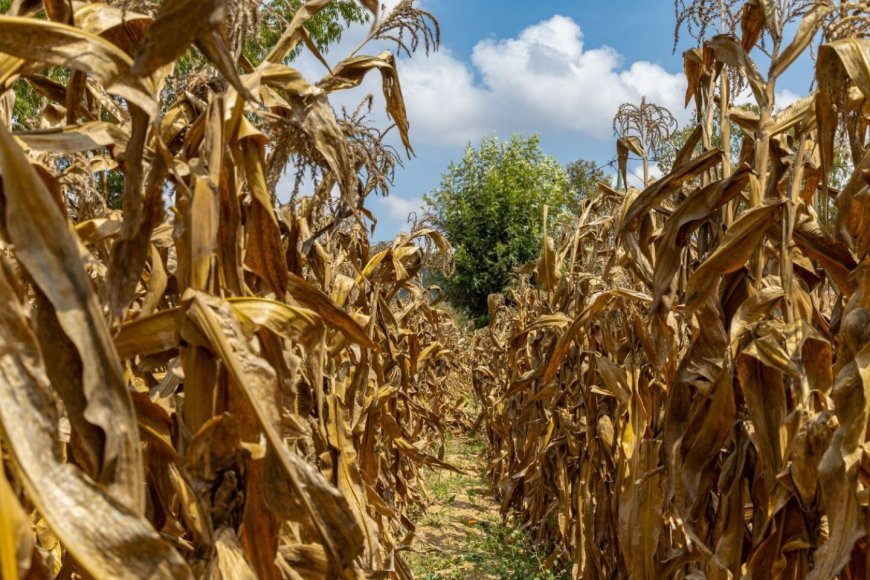
HARARE – As Zimbabwe grapples with the intensifying frequency of extreme weather events, the focus of the national climate response has shifted from disaster management to the complex, multi-billion-dollar machinery of climate governance. In the wake of the 2025 Global Stocktake (GST) and the approach of the next cycle of Nationally Determined Contributions (NDCs) in 2026, a rigorous examination of the nation’s climate architecture reveals a high-stakes battleground where power, money, and accountability intersect.
The functional core of this governance system is built upon a framework designed to translate international mandates—specifically the 1992 United Nations Framework Convention on Climate Change (UNFCCC) and the 2015 Paris Agreement—into local action. In Zimbabwe, this process begins with Goal Setting, a phase where scientific data is codified into national policy to meet the ambitious target of holding global temperature rises to 1.5°C. These goals, however, remain abstract without Regulation and Standard Setting, the mechanism by which the state converts climate pledges into enforceable rules, such as carbon emission caps for the industrial sector and efficiency standards for the energy grid.
The operationalization of these rules requires Planning and Coordination across a vast spectrum of stakeholders. According to internal government frameworks, this involves a "whole-of-society" approach. State actors, including ministries and local authorities, must align their strategies with international regimes like the UNDP and the World Bank. Simultaneously, non-state actors—NGOs, academia, and the media—serve as watchdogs, while the private sector and sub-national actors, such as city councils and rural communities, are tasked with ground-level implementation.
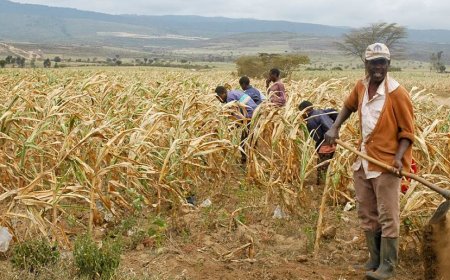
However, the primary friction point in Zimbabwean climate governance remains Financing. The mobilization of public and private resources is intended to facilitate adaptation for the most vulnerable populations. Yet, the tracking of these financial flows reveals a narrative of winners and losers. Investigative scrutiny into recent climate-resilience projects, such as the construction of major inland dams, highlights this disparity. While promoted as essential for water security in the face of recurrent droughts, these projects often spark debate over who truly benefits. Data suggests that while large-scale agribusinesses often secure the lion's share of redirected water, downstream smallholder farmers—those most susceptible to climate shocks—frequently face displacement or restricted access.
This tension extends to the burgeoning carbon market. Forest-protecting carbon offset projects, designed under the principles of the Kyoto Protocol’s legacy and the Paris Agreement’s Article 6, are theoretically intended to provide "tangible benefits" to local communities. In practice, however, the lack of robust Monitoring, Reporting, and Verification (MRV) systems has led to instances where rural livelihoods are curtailed by conservation restrictions without the promised compensation in the form of improved schools or healthcare infrastructure.
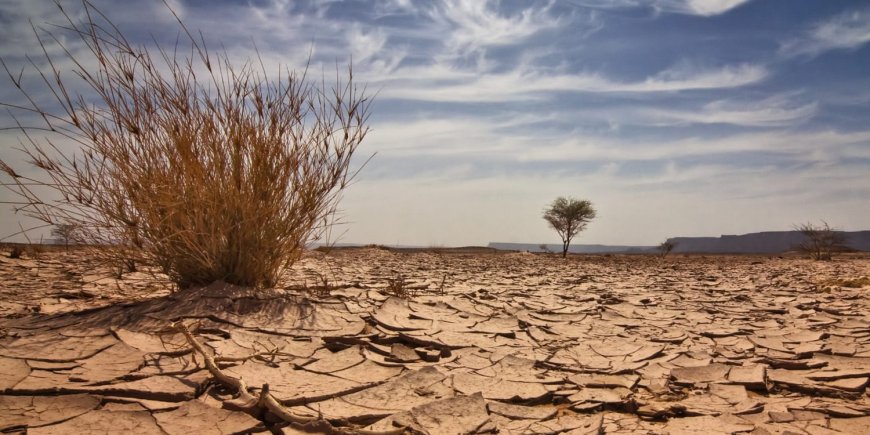
The accountability of these projects is now being tested by the Global Stocktake (GST). This five-year cyclical assessment, mandated by the Paris Agreement, acts as a global audit of climate progress. For Zimbabwe, the GST is a double-edged sword. On one hand, it provides a technical dialogue to identify gaps and opportunities for enhanced action; on the other, it exposes the "ambition gap"—the distance between what the government has promised in its NDCs and the reality of its emissions and adaptation progress on the ground.
The effectiveness of the GST in Zimbabwe hinges on Knowledge Management and Capacity Building. Without a deep reservoir of technical expertise and transparent data dissemination, the ability of state institutions to execute and oversee climate actions remains compromised. This information gap often allows a "connected elite" to capture progressive policies. For instance, the transition to solar energy, while environmentally necessary, has seen licensing distributions that favor industrial interests over the urban and rural poor, for whom energy affordability remains an elusive goal.
The ethical core of the climate story in 2026 is no longer just about the melting of glaciers or the parched earth of the Zambezi Valley; it is about the "who" and the "how." It is an investigation into whether climate funds are reaching their intended destinations or being siphoned by bureaucratic intermediaries. It is a question of whether the principle of Common but Differentiated Responsibilities (CBDR-RC)—the idea that developed nations must bear a greater financial burden for their historical emissions—is being translated into actual liquid capital for Zimbabwean adaptation.
As the nation prepares for the next round of NDC updates, the pressure on the Zimbabwean government to demonstrate measurable, reportable, and verifiable progress has never been higher. International donors and climate funds are increasingly tying disbursements to stringent accountability metrics. The Global Stocktake has highlighted where the country is on track and where it is falling behind, serving as a roadmap for future climate finance flows.
Ultimately, climate governance in Zimbabwe is a story of power dynamics. It examines who holds a seat at the negotiating table during the annual Conference of the Parties (COP) and whose voice is silenced during local village development committee meetings. By focusing on the "Money, Power, and Accountability" triad, the narrative shifts from describing climate disasters to scrutinizing the policies intended to prevent them.
The transition to a net-zero future requires more than just political will; it requires a governance system that is fair, transparent, and inclusive. As the 2026 fiscal year unfolds, the scrutinization of Zimbabwe’s climate architecture will determine whether the nation’s response to the environmental crisis serves the interests of all its citizens or merely reinforces existing inequalities. The "ambition gap" is not just a scientific measurement—it is a measure of political and moral accountability to the most vulnerable sectors of Zimbabwean society.