NSSA: OSHMS Is Interrelated System To Set Safety Policies, Protect Workers And Public
NSSA: OSHMS Is Interrelated System To Set Safety Policies, Protect Workers And Public
 Francis
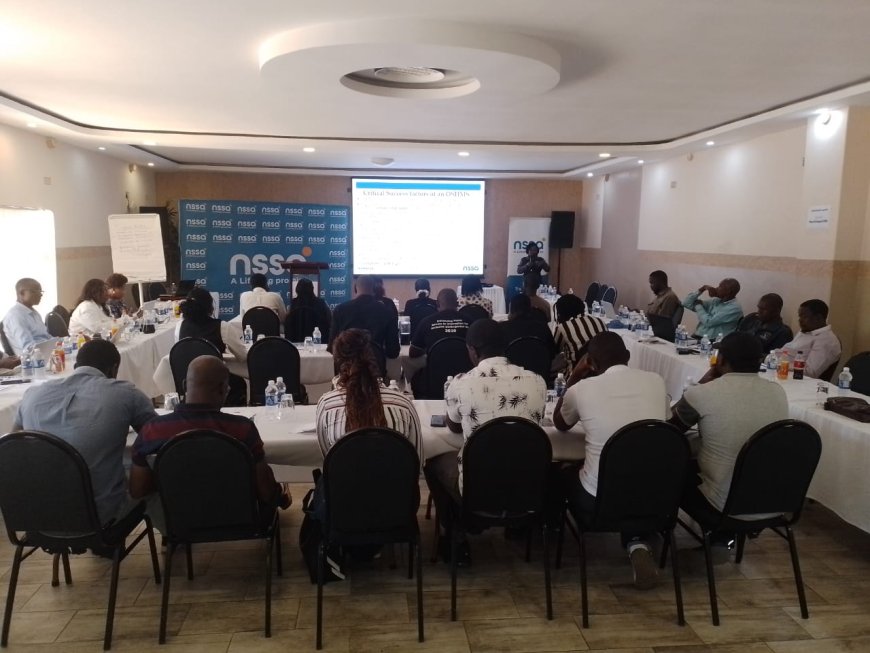
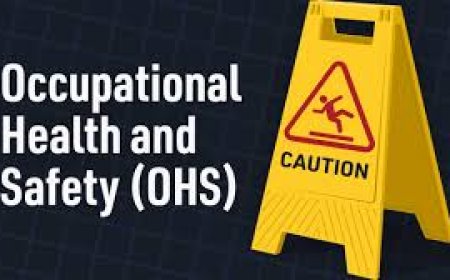
GWERU — The National Social Security Authority (NSSA) has declared that an Occupational Safety and Health Management System (OSHMS) is not merely a collection of safety rules, but an interconnected framework designed to establish robust safety policies, assign clear responsibilities, and drive continuous improvement to prevent workplace injuries and illnesses. This statement was delivered to 100 journalists on Monday in Gweru.
Thembekile Dumbu, Principal OSH Promotion Officer at NSSA, provided the definitive breakdown of OSHMS during the Journalists Basic Occupational Safety and Health Course (BOSHC) held at The Village Lodge. She emphasized that OSHMS represents a fundamental shift away from fragmented, piecemeal safety measures toward a structured, organisation-wide strategy.
“OSHMS is a set of interrelated or interacting elements of an organisation meant to establish Occupational Safety and Health (OSH) policies and objectives, and the processes to achieve those objectives,” Dumbu explained, directly quoting her presentation slide. She underscored the term “interrelated,” making it clear that safety is not an isolated function but touches every department, from human resources to the factory floor.
Dumbu then outlined the essential components that any genuine OSHMS must contain. “The system includes organisation structure, roles and responsibilities, planning, operation, performance evaluation, and continual improvement,” she said. She issued a blunt challenge to the attending reporters: if a company cannot produce a simple organogram showing who owns safety at each level, then that company effectively has no OSHMS at all.
Crucially, Dumbu expanded the traditional duty of care beyond a company’s own employees. “Organisations have a responsibility for the safety and health of their workers and others who can be affected by their activities,” she stressed. That “others” category, she clarified, includes contractors, truck drivers, visitors, and entire communities living near factories or mines — a direct warning to industries operating in populated areas.
She then articulated the core purpose of implementing such a system. “Hence, the OSHMS implementation’s main purpose is to enable organisations to provide safe and healthy workplaces, prevent work-related injury and ill-health, and improve OSH performance continually,” Dumbu said. With forceful emphasis on the word “continually,” she rejected the notion that safety can be achieved through a one-time audit or a single training session.
To make the distinction tangible, Dumbu contrasted OSHMS with superficial safety campaigns. “A campaign gives workers T-shirts for one week. OSHMS gives them documented roles, planned risk controls, and monthly performance data for years,” she said. She urged journalists to demand evidence of the system — not just slogans — whenever they report on workplace accidents.
Linking the discussion to Zimbabwe’s actual injury trends, Dumbu cited sobering national data. Zimbabwe recorded 75 worker deaths and 8,770 injuries in 2022-2023, followed by 57 deaths and 8,371 injuries in 2024-2025. However, she noted that the Injury Frequency Rate fell from 2.3 to 2.1, and she credited 42 companies that completed NSSA OSHMS gap audits for contributing significantly to that decline.
On a global scale, Dumbu referenced International Labour Organization (ILO) figures showing that 2.7 million workers die each year from occupational accidents and diseases, alongside 160 million work-related illnesses. She pointed to ISO 45001 — the internationally recognized OSHMS standard — as a proven tool to help countries reduce those catastrophic numbers. “OSHMS is the bridge between Zimbabwean law and global best practice,” she affirmed.
Dumbu then introduced the concept of Vision Zero — the ambitious target of zero fatalities and zero serious injuries — and positioned OSHMS as the only practical management tool to reach it. “You cannot achieve Vision Zero without a system,” she said. “And you cannot run a system without measuring it.” The message was clear: aspiration without structure is meaningless.
Equipping journalists with practical investigation tools, Dumbu provided a checklist of story-generating questions. “Does the company have a written OSH policy signed by the CEO? Can they show roles and responsibilities for each job? When was the last performance evaluation? What changed after the last injury?” she asked. She warned that negative or evasive answers to these questions are telltale signs of systemic failure.