Inaugural Joint Forestry Indaba Sets Bold Agenda for Sustainable Tobacco and Forest Management
 Francis

The inaugural Joint Forestry Indaba, convened at the Harare International Conference Centre, marked a defining moment in Zimbabwe’s journey toward aligning economic growth with environmental stewardship. Bringing together government ministries, farmers, regulators, financiers, civil society, and international partners, the landmark gathering brought to the fore the fact that the future of Zimbabwe’s tobacco industry is inseparable from the health of its forests.
Byron Adonis Mutingwende
Under the theme “Sustainable Forestry and Tobacco Production,” the Indaba created a unified platform to confront deforestation, climate change, and sustainability challenges, while safeguarding one of the country’s most valuable export industries.
In her keynote address, the Minister of Environment, Climate and Wildlife, Hon. Dr Evelyn Ndlovu, described the Indaba as “not just another meeting, but a turning point.”
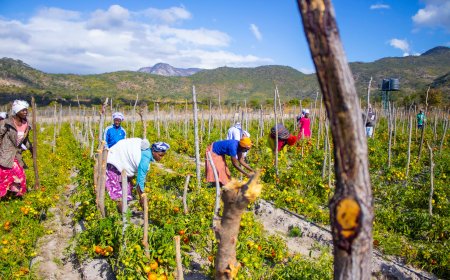
Tobacco remains Zimbabwe’s largest agricultural foreign currency earner, supporting over 140,000 active farmers and contributing more than US$1.2 billion during the 2024–2025 season. Yet, tobacco curing, traditionally reliant on fuelwood, places immense pressure on forests, accelerating deforestation and biodiversity loss.
Zimbabwe is estimated to lose approximately 262,000 hectares of forest land annually. Research indicates that tobacco farming and curing practices are significant contributors to this trend.
Dr Ndlovu emphasised that forests and tobacco can no longer be treated as separate silos.
“The health of one sector directly impacts the sustainability of the other. If we fail to act decisively, we risk undermining both our environment and our economy.”
International markets are increasingly demanding green and traceable tobacco. Failure to meet sustainability standards could jeopardise market access and the livelihoods of thousands of farmers.
To respond to these pressures, the Ministry of Environment announced several transformative initiatives:
Engagement with the Forest Stewardship Council to develop a national forest stewardship standard.
Launch of a laboratory under the UN-REDD Programme to accelerate certification of indigenous tree species.
Scaling up afforestation and reforestation programs nationwide.
Strengthening enforcement of environmental regulations.
Promoting climate-smart agriculture and alternative curing technologies.
These efforts align with the Presidential Forest Legacy Programme and the Diplomatic Tree Planting Initiative, which aim to restore degraded landscapes and protect indigenous forests.
Delivering his address, Dr Anxious Jongwe Masuka, Minister of Lands, Agriculture, Fisheries, Water and Rural Development, outlined Zimbabwe’s ambitious yet sustainability-focused Tobacco Transformation Plan.
The country produced a record 355 million kilograms of tobacco in 2025, exported to over 60 jurisdictions. The target is to increase output to 500 million kilograms annually, but primarily through vertical growth, not horizontal expansion.
Key strategies include:
Increasing yield per hectare.
Reducing post-harvest losses (currently 15–20% in smallholder systems).
Transitioning to energy-efficient curing technologies.
Phasing out the use of indigenous firewood for curing by 2029.
Dr Masuka emphasised that 85% of Zimbabwe’s tobacco is grown by smallholder farmers, and 93% is produced under contract farming arrangements. Contractors will play a central role in enforcing sustainability standards.
The Tobacco Research Board in Kutsaga will spearhead innovation in curing systems that use less firewood per kilogram of tobacco. Additionally, the long-standing guideline of planting one hectare of eucalyptus woodlot for every seven hectares of tobacco will be strictly enforced by the Tobacco Industry and Marketing Board (TIMB).
Providing policy context, Deputy Chief Secretary in the Office of the President and Cabinet, Mr Willard Manungo, presented an overview of Zimbabwe’s second National Development Strategy (NDS2), which runs from 2026 to 2030.
NDS2 is the principal instrument driving the country toward Vision 2030, transforming Zimbabwe into an empowered, upper-middle-income society.
The strategy identifies deforestation as both an environmental and economic risk and integrates forest conservation into national development planning. It prioritises:
- Reforestation and wetland protection.
- Climate-smart agriculture.
- Sustainable land management.
- Value addition and beneficiation in agriculture.
- Promotion of energy-efficient curing technologies.
- Community-based forestry initiatives.
Through coordinated action across its ten priority clusters, NDS2 embeds climate resilience and environmental protection at the heart of economic transformation.
Dr Ndlovu further highlighted the Zimbabwe Biodiversity Economy Initiative, anchored on five strategic pillars:
- Wildlife
- Forests
- Blue economy
- Bio-trade
- Payment for ecosystem services
The upcoming Zimbabwe Biodiversity Economy Summit, scheduled for May 21–22, 2026, will build on the Indaba’s outcomes and position natural capital as a key component of the national balance sheet.“Conservation must not be seen as a cost, but as a high return on investment for the people of this country.”
The Minister of State for Provincial Affairs and Devolution for Harare Metropolitan Province, Mr Charles Tawengwa, emphasised the broad representation at the Indaba. More than 35 organisations participated, including government ministries, district councils, regulators, tobacco associations, development partners, and international agencies.
The diversity of stakeholders reflected the gravity of the challenge and the national consensus required to address it.
Perhaps the most decisive outcome of the Indaba was the collective commitment to transition toward zero use of indigenous firewood in tobacco curing by 2029.
This will require:
- Mandatory woodlot establishment.
- Carbon credit financing mechanisms.
- Stronger enforcement by regulators.
- Monitoring through a dedicated multi-stakeholder working group.
- Support for smallholder farmers to adopt sustainable technologies.
- The government also aims to leverage carbon markets to claim credits from reduced deforestation and accelerated reforestation.
The Indaba concluded with a call for actionable solutions, not just dialogue.
Zimbabwe stands at a crossroads. Tobacco is a pillar of livelihoods, trade and national pride. Forests are the foundation of biodiversity, climate resilience and long-term prosperity. The challenge, and opportunity, is to ensure both thrive together.
As Dr Ndlovu affirmed, “Let us demonstrate to the international community that Zimbabwe can become a global leader in showing how forests and tobacco can coexist in a balanced and sustainable manner.”
If the commitments made at the Harare International Conference Centre are translated into measurable action, the inaugural Joint Forestry Indaba may well be remembered as the moment Zimbabwe decisively aligned economic ambition with environmental responsibility.
Source: https://spikedmedia.co.zw/