Climate Volatility and the “Myth of Normal”: Zimbabwe’s $12.5 Billion Agricultural Goal Under Siege
 Francis

For decades, Zimbabwean farmers relied on the rhythmic predictability of the seasons—planting with the first rains of November and harvesting in the mild sun of April. However, a groundbreaking analysis of rainfall distribution in Harare from 1970 to 2024, coupled with the World Bank’s January 2025 Zimbabwe Economic Update (ZEU), reveals that the concept of “normal weather” has become a dangerous myth.
As the government pursues an ambitious $12.5 billion agricultural output target, the data shows a country caught in the crosshairs of a contracting growing season and a surge in extreme, unpredictable weather events that threaten to erode up to 12% of GDP annually.
The Harare Rainfall Trend: A Season in Retreat
The Climate Change Reporting Manual emphasizes that "climate" is the long-term average measured over decades, not days. Looking at Harare’s rainfall distribution between 1970 and 2024, the evidence of disruption is stark. While total annual precipitation has not shown a simple linear decline, the timing and intensity of that rain have shifted fundamentally.
The data reveals a significant contraction in the length of the rainy season. Rainfall in March and April—the traditional "tail end" of the season essential for grain filling—has shown a consistent declining trend compared to earlier decades. Conversely, the months that do receive rain are characterized by "extreme variability." For instance, the record high of 284 mm in January 1990 stands in haunting contrast to the desiccated mid-summer droughts seen in the 2023/24 season.
This pattern—intense rainfall events interspersed with prolonged dry spells—is consistent with regional climate change projections for Southern Africa. It confirms that Zimbabwe is not just getting "drier" in a uniform sense; it is getting more unpredictable.
The Economic Toll: A 3.2% Hit to GDP
The economic consequences of this unpredictability are no longer theoretical. According to the World Bank report, titled "Improving Resilience to Weather Shocks and Climate Change," the 2023/24 El Niño-induced drought caused approximately $363 million in direct damage and losses.
This single weather event triggered a 3.2% drop in national GDP, lowered export earnings, and widened the fiscal deficit by 0.9% of GDP. Government revenue plummeted to 18.5% of GDP as economic activity slowed, while expenditures rose to 20.9% to cover emergency food imports and support for the vulnerable.
"Business as usual is not an option," warns Dominick Revell de Waal, World Bank Senior Economist and co-author of the ZEU. "The frequency of droughts has risen from one in ten growing seasons (1902–1979) to one in four (1980–2011). This growing trend highlights the urgent need for Zimbabwe to develop robust strategies to insulate growth from negative climate impacts."
The Media Pitfall: Weather vs. Climate
As Zimbabweans grapple with these shifts, the Climate Change Reporting Manual warns media practitioners against the "False Balance" trap. A common pitfall is using a single cold snap or a week of heavy rain to dismiss long-term warming trends.
Precise language is essential: weather is what happens today; climate is the decade-long shift that makes today’s heatwave or flood more intense. Referring to the current volatility as a "new normal" is also discouraged, as it implies a new state of stability. In reality, Zimbabwe is in a state of ongoing disruption where the goalposts of "predictable weather" are constantly moving.
Agriculture: The Vulnerable Pillar
The stakes could not be higher. Agriculture contributes 17% to Zimbabwe's GDP and provides 68% of the raw materials used in the manufacturing sector. Crucially, it employs 70% of the population.
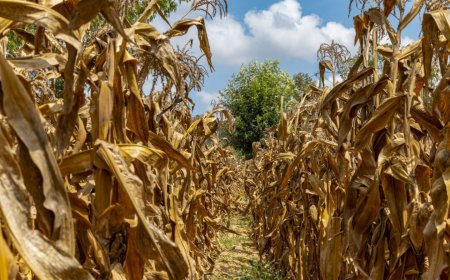
The sector’s heavy reliance on rain-fed maize makes it a "sitting duck" for the El Niño-Southern Oscillation (ENSO). During El Niño phases, temperatures soar and rains fail, as seen in the 2023/24 season when maize yields crashed by 60%. Conversely, La Niña brings the risk of destructive flooding.
The Path to Resilience: Adaptation and Anticipatory Action
To break the cycle of "drought and recovery," the ZEU advocates for a dual-track approach:
Re-orienting Public Investment: The report suggests shifting funds from traditional agricultural subsidies toward climate-resilient infrastructure. This includes investing in irrigation, research into drought-tolerant seed varieties, and landscape management to prevent soil erosion during intense "bursts" of rain.
Strengthening Anticipatory Action: Every $1 invested in early action saves $16 in future emergency costs. The ZEU recommends finalizing the Disaster Risk Management (DRM) legislation and scaling up the Harmonized Social Cash Transfer program to protect marginalized communities before the harvest fails.
Easther Chigumira, World Bank Senior Agriculture Specialist, emphasizes that resilience requires proactive measures based on scientific forecasts rather than reactive humanitarian aid. This includes strengthening the National Social Registry to ensure that when the next climate shock hits, help reaches the most vulnerable without duplication or delay.
Scrutinizing the Future
As Zimbabwe navigates this era of heightened variability, the role of the media is to hold power accountable for the implementation of these climate policies. Reporting must move beyond "disaster porn"—sensationalist images of cracked earth—and focus on the structural implementation of the National Adaptation Plan.
The data from 1970 to 2024 is clear: the climate has changed. The question remaining for Zimbabwe’s policy-makers and citizens is no longer if the next shock is coming, but how much they are willing to invest today to survive tomorrow.