Zimbabwe Warns Miners of Rainy Season Dangers as Deaths Mount
 Francis
Zimbabwe Warns Miners of Rainy Season Dangers as Deaths Mount The Ministry of Mines and Mining Development has issued a stark safety warning to the nation’s mining sector, large, medium or small scale to cease all mining activities as the 2025-2026 rainy season intensifies, following several flood-related fatalities.
The plea underscores the perennial clash between mineral extraction and increasingly volatile weather patterns in Southern Africa.
By Francis Shupayi Bingandadi Editor FinTech Review.Africa
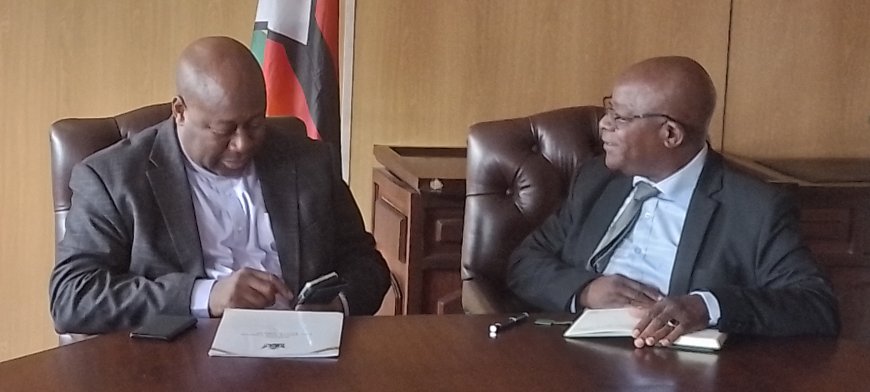
Briefing the media, the Hon. Minister of Mines and Mining Development, Winston Chitando implored all miners—from sprawling conglomerates to artisanal operators—to halt high-risk activities, emphasizing that "human life is by far worth more than any mineral."
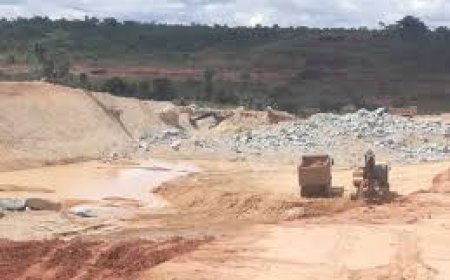
The advisory follows what officials described as "regrettable" and avoidable deaths already recorded this season due to mine flooding. The Ministry outlined a non-exhaustive list of critical prohibitions: working near waterways, operating in low-lying areas prone to flooding, engaging in the highly dangerous practice of underground "pillar robbing," and conducting excavations in old, water-logged workings where ground stability is compromised.
The warnings are grounded in well-understood geological risks that are catastrophically amplified by rainfall. Zimbabwe's mineral wealth, particularly in gold and chrome, is often hosted in near-surface deposits and worked through shallow, frequently undocumented shafts.
The country’s geology, featuring metamorphic belts like the famous Greenstone Belts, becomes treacherous when saturated. During the rainy season we experience heightened risks in the form of flooding, drowning, weakened ground leading to fall and ground subsidence as well as slimes dam breaches. The Ministry would like to implore all the miners to be cognizant of these dangers and risks, and accordingly take adequate precautions to mine safely and preserve lives
“The Ministry therefore advises our miners as follows: a) Avoid working or mining along water ways as there is potential of shafts flooding from rain upstream posing risks; b) Avoid digging and blasting in old mine workings as the ground may become unstable and bound to collapse;
c) Pillar robbing underground should be avoided at anytime and at all costs;
d) Generally miners should avoid sinking shafts in low lying areas as there is a danger of mines being flooded by free flowing waters during the rains;
e) Miners should take measures to divert free flowing water to avoid flooding of the shaft workings.” Said the Minister. The Minister said that, “Thorough risk assessment to be carried out before miners get into underground shafts. Where such assessment indicate any potential risk miners are advised to completely stop mining altogether and resume when rains stop. Regrettably we have already lost lives this rainy season due to flooding something that could have been avoided. Furthermore, miners should cooperate with instructions given by Government authorities to ensure safe mining operations.” These inherent dangers are set against a backdrop of a predicted active rainfall season.
According to the Southern African Regional Climate Outlook Forum (SARCOF), most of Zimbabwe is forecast to receive normal to above-normal rainfall for the remainder of the 2025-2026 season. This is largely driven by a persistent La Niña event in the Pacific, which typically correlates with wetter conditions across Southern Africa.
The North American Multi-Model Ensemble (NMME), a key tool referenced by climate scientists, has consistently projected enhanced precipitation for the region through the first quarter of 2026. More granular national forecasts from the Zimbabwe National Climate Outlook Forum (NARCOF) align with this, indicating high probabilities of prolonged wet spells and intense rainfall events, particularly in the central and northern mining districts.
"This isn't just a gentle rainy season; we are looking at the potential for repeated, high-intensity downpours," said a meteorologist at the Zimbabwe Meteorological Services Department, who declined to be named as they were not authorized to speak. "This translates directly into flash flooding, rapid filling of open pits and shafts, and overwhelming of water diversion systems." The government’s advisory highlights the acute vulnerability of Zimbabwe's diverse mining sector.
While large-scale, formalized mines have sophisticated water management and ground control protocols, the nation's economic reliance on small to medium-scale miners—who contribute over 60% of the country's gold output—presents a monumental enforcement challenge. These operators often work in remote locations with limited capital, chasing narrow, high-grade veins.
The imperative to maintain production, especially amidst high global mineral prices, can conflict sharply with safety mandates. The statement also calls for "thorough risk assessment" before descending underground, a standard that requires expertise and equipment often beyond the reach of the smallest operators. The onus is increasingly on industry associations and larger mining companies with neighboring claims to extend safety oversight and community awareness programs.
The Ministry's forceful statement signals a possible shift towards stricter regulatory enforcement during weather events. The directive for miners to "cooperate with instructions given by Government authorities" suggests inspections and mandatory stoppages may increase.
Market analysts note that while seasonal rains typically cause modest production dips, a catastrophic event—such as a major slimes dam failure or a multi-fatality mine collapse—could trigger severe operational disruptions, regulatory crackdowns, and reputational damage for the sector. This is particularly sensitive for Zimbabwe, which is aggressively marketing itself to foreign mining investors. As the clouds gather, the message from the Ministry of Mines is unequivocal: the cost of extracting value from the earth must never be measured in human lives. The coming months will test whether that warning can penetrate the depths of Zimbabwe's mines amid the roar of the rain.