From Mine to AI: Zimbabwe's Lithium Bounty Fuels Global Tech, But At What Cost?
 Francis

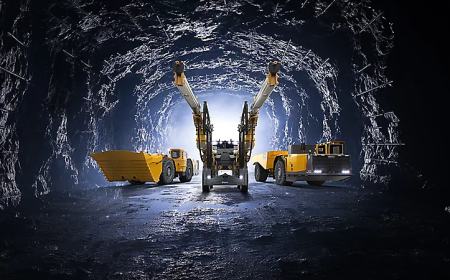
HARARE, ZIMBABWE – Beneath the sun-scorched earth of Zimbabwe lies a treasure trove of elements powering the 21st century’s greatest technological leap: artificial intelligence. With some of the world’s largest lithium reserves, alongside crucial deposits of copper and cobalt, the nation is geopolitically seated at the raw material ground zero of the AI revolution. Yet, a growing chorus of analysts, civil society, and industry watchdogs warns that without a radical strategic shift, Zimbabwe risks becoming a cautionary tale—a mineral-rich nation that exported its future in raw ore, while others reaped the astronomical rewards of the AI age.
By Francis S. Bingandadi Editor FinTech Review.Africa
This warning is the central finding of a comprehensive new analysis of Zimbabwe’s critical minerals sector, reviewed by this outlet, which details a cycle of unchecked exports, opaque deals, and missed opportunities that threaten to lock the country into a perpetual role as a supplier of dirt, rather than a manufacturer of destiny.
The AI Engine’s Fuel: A Zimbabwean Connection
The link between Zimbabwe’s red soil and a silicon chip in a California data center is direct. Lithium-ion batteries are the indispensable workhorses of the AI infrastructure boom, powering everything from vast server farms requiring backup storage to the electric vehicles in the global logistics chain. Cobalt stabilizes these batteries, while copper forms the nervous system of all electronics. As nations and corporations scramble to secure these materials, Zimbabwe has become a critical, if contentious, battlefield.
“Zimbabwe isn't just mining minerals; it's mining the foundational components of the Fourth Industrial Revolution,” says Dr. Anisha Patel, a critical minerals strategist at the Africa Institute of Strategic Studies. “But possessing the keys does not guarantee you get to drive the car. Currently, the car is being built and driven elsewhere.”
The data underscores the scale of the disconnect. While Zimbabwe’s lithium exports have surged, reaching hundreds of millions of dollars, they are almost exclusively in the form of raw spodumene concentrate or basic lithium salts. The analysis notes that the $20 million in lithium exports recorded in 2020 is a mere fraction of the $20 billion global lithium market projected for 2025, a market value concentrated in processed battery-grade chemicals, cell manufacturing, and final product assembly.
The Chinese Dominance and the "Resource Curse" Redux
This export-oriented model has been cemented by a overwhelming dependence on foreign capital, predominantly from China. Firms like Zhejiang Huayou Cobalt, Sinomine Resource Group, and Chengxin Lithium have invested over $1 billion in acquiring and developing Zimbabwean lithium assets at a staggering pace. While this investment has brought development and jobs, it has also concentrated power and raised alarms.
“The capital is welcome, but the terms are often shrouded in secrecy,” Analysts have warned that Zimbabwe has seen limited technology transfer, most processing is slated for offshore facilities, and the fiscal benefits to the state remain unclear due to confidentiality clauses and potential underpricing.
This dynamic feeds into classic “resource curse” symptoms: weak local value addition, vulnerability to commodity price swings, and social friction. The report cites documented cases from the Zimbabwe Human Rights Commission of forced evictions and community suppression around new mines, alongside persistent concerns over environmental degradation and corruption in licensing.
Infrastructure Poverty: The Brick Wall to Beneficiation
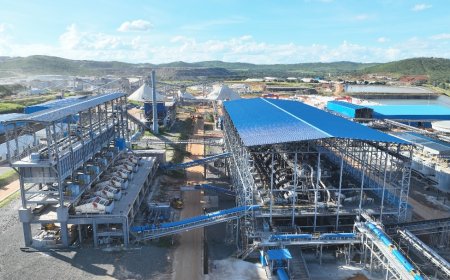
Even with the political will to process minerals domestically, Zimbabwe faces a stark physical reality: it lacks the power and plants to do so at scale. Lithium processing is energy-intensive, and Zimbabwe suffers from an energy deficit estimated at 1,000 megawatts. Rolling blackouts are routine. Furthermore, the country’s current processing capacity is a drop in the ocean of global demand.
“You cannot build a battery industry in the dark,” says a frustrated engineer at a state-owned mining entity, speaking on condition of anonymity. “We are being asked to compete in a Formula One race with a bicycle. Investors talk about downstream plants, but then they see the infrastructure and the conversation stops.”
A Fork in the Road: Strategic Shifts and the AI Policy Imperative
The analysis, however, is not solely a critique. It outlines a narrow but viable path for Zimbabwe to leverage its minerals for true industrial transformation, directly tying it to the nation’s nascent artificial intelligence policy ambitions.
First, it urges diversification of investment partnerships. New Western initiatives like the European Union’s Critical Raw Materials Act and the U.S.-led Minerals Security Partnership are explicitly designed to build ethical, secure supply chains away from geopolitical adversaries. Zimbabwe, the report argues, could use these frameworks to strengthen its negotiating hand, demanding better terms, transparency, and local partnership structures.
Second, it calls for a targeted, phased approach to local beneficiation. Instead of aspiring to immediate cell manufacturing, Zimbabwe could focus on intermediate, high-value steps like producing lithium sulfate or copper foil. This would capture more revenue and build technical expertise. “The goal should be to move one or two critical steps up the value chain, not a miraculous leap to the top,” Patel advises.
Most critically, the report directly links mineral strategy to AI policy. A thoughtful Zimbabwean AI policy, it argues, must be rooted in its mineral advantage. This means prioritizing the development of local capabilities in adjacent industries: not just battery storage solutions for its own energy grid, but potentially fostering R&D in material science for semiconductors and investing in the data center infrastructure that its own minerals will power globally.
“An AI policy that ignores our mineral base is a castle built on sand,” says Tawanda Makoni, a Harare-based tech entrepreneur. “We should be training our engineers in battery chemistry and sustainable mining tech, not just software development. Our competitive edge is in the ground.”
The Stakes for Global Tech
The implications ripple far beyond Zimbabwe’s borders. For the global AI industry, which demands an ever-growing, secure supply of critical minerals, the instability and opacity in Zimbabwe represent a significant supply chain risk. The concentration of production in one bilateral relationship is a vulnerability.
For Zimbabwe, the stakes are existential. It is a moment of profound choice: to remain a digger and shipper, watching the value of its resources multiply in foreign lands, or to undertake the difficult, capital-intensive work of building domestic industrial muscle. The minerals that will shape the intelligence of machines for decades to come lie in its soil. The intelligence of its strategy will determine whether that is a blessing, or just another curse.