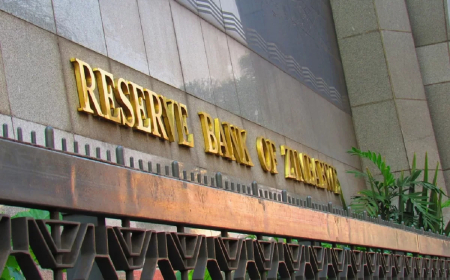
Zimbabwe’s Central Bank Bets on Stability as New Currency Notes Roll Out
 Francis

HARARE, 27 February 2026 — For the first time in decades, Zimbabwe’s Reserve Bank is touting single‑digit inflation, a stable exchange rate, and a redesigned currency as proof that its cautious monetary stance is paying off. Governor Dr. John Mushayavanhu’s 2026 Monetary Policy Statement (MPS), delivered Friday, sets out a vision of “stability before expansion” — a mantra that could define the country’s economic trajectory for years to come.
A Historic Milestone: Inflation Under Control
The headline achievement is striking: annual local‑currency inflation slowed to 4.1% in January 2026, the lowest in more than thirty years. Monthly inflation averaged just 0.4% in 2025 and hovered near zero in January. For a nation scarred by hyperinflation, the numbers represent a psychological turning point.
Dr. Mushayavanhu emphasized that the Reserve Bank’s tight monetary stance — anchored by a 35% policy rate — has contained money supply growth and kept liquidity within target ranges. “We are entrenching price stability without compromising growth,” he said, noting that inflation dynamics will continue to guide future adjustments.
Currency Credibility: The Big Five ZiG Notes
Symbolism matters in monetary policy, and the RBZ is betting that redesigned notes will help restore confidence. On 7 April 2026, Zimbabweans will begin using the upgraded “Big Five” ZiG banknote series, featuring lions, elephants, buffalo, leopards, and rhinoceroses.
The notes, issued in denominations up to 200 ZiG, boast improved durability and enhanced security features. Officials say the redesign is not cosmetic but part of a broader roadmap toward a mono‑currency system by 2028. For now, the multi‑currency framework remains, with the U.S. dollar still dominant in daily transactions.
Exchange Rate Stability and Foreign Reserves
The RBZ reported that the exchange rate held steady in 2025, trading between ZiG25–27 per U.S. dollar, with the parallel market premium contained below 20%. Foreign currency receipts rose sharply to US$16.2 billion in 2025, up 21.8% from the previous year.
Reserves now cover six times the local currency reserve money and twice the entire stock of ZiG deposits. As of December 2025, foreign reserves stood at US$1.2 billion, equivalent to 1.5 months of import cover. The central bank monitors reserves daily at 4:00 PM, allowing rapid intervention if shocks emerge.
Banking Sector Stability
The banking sector remains “safe, sound, and inclusive,” according to the RBZ. Non‑performing loans stood at 3.47% at year‑end, below the international benchmark of 5%. Capital buffers and liquidity levels are deemed adequate, while the National Payments System maintained uptime above 95% for both RTGS and retail platforms.
Financial inclusion has expanded, with mobile money and ZIPIT transaction limits raised to encourage wider use of ZiG. Cash withdrawal limits were also increased — up to ZiG10,000 per week for individuals and ZiG100,000 for corporates.
Policy Instruments: Tight but Targeted
The RBZ retained statutory reserve requirements at 15% for savings and fixed deposits, and 30% for demand call deposits. Minimum deposit interest rates remain at 5% for ZiG savings and 2.5% for U.S. dollar savings, with higher rates for time deposits.
To manage liquidity, the bank introduced the ZiG Denominated Term Deposit Facility (ZiGDTDF), complementing existing negotiable certificates of deposit. The Targeted Finance Facility (TFF) was expanded to ZiG1 billion to support productive sectors, while exporters continue to retain 70% of foreign currency earnings.
Support for Small‑Scale Miners
In a bid to deepen the use of ZiG, small‑scale gold miners will now receive 10% of their payments in local currency, with the remainder in U.S. dollars. The measure is designed to boost circulation of ZiG while ensuring miners retain access to hard currency.
Gold remains central to Zimbabwe’s reserve strategy, and small‑scale miners are vital suppliers. By linking currency reform to this sector, the RBZ hopes to strengthen both reserves and confidence.
Toward a Mono‑Currency System
The long‑term vision is clear: Zimbabwe aims to transition to a mono‑currency system by 2028. The RBZ says “conditions precedent” for this shift are being met, citing progress in 2025. The goal is a smooth, market‑led transition, avoiding abrupt shocks that could undermine stability.
For now, the multi‑currency system remains, reflecting the reality that U.S. dollars still dominate trade and savings. The redesigned notes and inflation control are steps toward credibility, but public trust will ultimately determine whether ZiG can stand alone.
The Balancing Act
Critics argue that maintaining a 35% policy rate constrains borrowing and investment. Businesses face high financing costs, limiting expansion. Yet supporters insist that premature easing could reignite instability.
Dr. Mushayavanhu’s stance is unequivocal: “Stability must come first.” The RBZ believes that only once inflation is firmly anchored can Zimbabwe pursue aggressive growth strategies.
Public Confidence: The Ultimate Test
Monetary policy is as much about psychology as economics. The RBZ’s achievements — single‑digit inflation, stable exchange rates, robust reserves — are impressive on paper. But the real test lies in public confidence.
If citizens believe the ZiG is stable, they will use it. If doubts persist, dollarisation will remain entrenched. The redesigned notes, reserve accumulation, and cautious stance are all aimed at rebuilding trust.
Conclusion: Stability Before Expansion
The 2026 Monetary Policy Statement marks a turning point in Zimbabwe’s economic narrative. For the first time in decades, inflation is under control, reserves are growing, and currency reform is underway.
The path to a mono‑currency system by 2028 is ambitious but achievable — if stability is sustained. Zimbabwe’s economic future hinges on the success of this disciplined approach.
Dr. Mushayavanhu’s message is clear: stability before expansion. For a nation scarred by monetary turbulence, this philosophy may be the only way to rebuild trust, restore sovereignty, and chart a sustainable path forward.