
Digital Funding Frontier: Venture Capital Panel Charts New Course for Zimbabwean Startups
 Francis
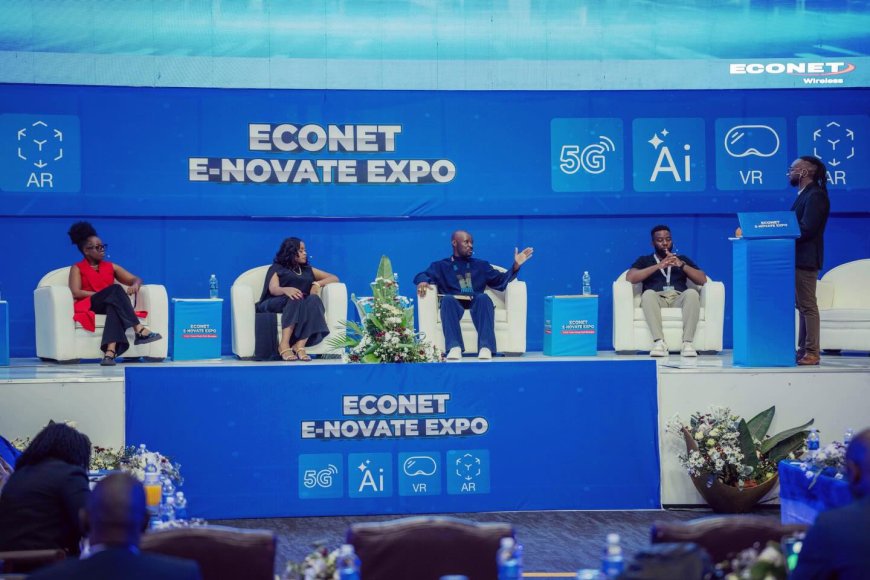
In a pivotal discussion at the Econet Wireless Enovate Expo 2025, a panel of leading investors, entrepreneurs, and ecosystem builders dissected the evolving landscape of venture capital and startup funding in the digital era. Moderated by human capital consultant Andy Hodges, the conversation moved beyond the perennial complaint of "lack of funding" to diagnose systemic gaps and propose actionable pathways for capital to fuel Zimbabwe's innovation economy.
A central consensus emerged that the traditional venture capital model, built on Silicon Valley timelines and exit strategies, is often a poor fit for Zimbabwe's context. Tinotenda Kambasha, head of the National Venture Fund, challenged local entrepreneurs to refine their value proposition. "The question is no longer why you need funding, but how your venture creates tangible, scalable value within our economic framework," Kambasha stated. He emphasized that investors now prioritize robust unit economics and clear paths to profitability over mere user growth, especially in sectors like agritech, fintech, and renewable energy.
Echoing this, innovation strategist Pedzi "TheCoachZW" Chimbwanda of Eight2Five Innovation Hub highlighted a critical gap in preparation. "Many brilliant tech solutions are presented as passion projects, not investable businesses. The missing layer is often the strategic business architecture—the governance, financial controls, and scalable operational model that de-risks an investment," Chimbwanda noted. His hub focuses on bridging this gap, preparing startups for the rigors of institutional due diligence.
From the entrepreneur's perspective, George Munengwa, founder of ProAir Zimbabwe, provided a ground-level view of the funding journey. "Early-stage capital isn't just about money; it's about strategic alignment. We need 'smart capital'—investors who bring networks, market access, and mentorship," Munengwa asserted. He shared that ProAir's breakthrough came not from a pure financial injection but from an investor who facilitated key partnerships in the health and logistics sectors.
This sentiment was expanded upon by global educator and policy strategist Audrey Simbiso Chidawanyika. She argued for a holistic view of an innovation ecosystem. "Funding is one node in a network. Its effectiveness is multiplied or diminished by the strength of other nodes: talent development, supportive policy, research collaboration, and market access programs," Chidawanyika explained. She called for coordinated "ecystem building" where government, academia, corporates, and financiers align their strategies to create a nurturing environment for high-potential ventures.
The panel explored innovative funding mechanisms gaining traction globally. Blended finance—which combines concessional public or philanthropic capital with commercial private investment to fund high-impact ventures—was highlighted as a key tool for de-risking sectors crucial to national development, such as climate tech and rural connectivity.
Furthermore, alternatives to equity dilution, like venture debt, revenue-based financing, and corporate venture arms, were discussed as essential for creating a diversified funding ladder. Moderator Andy Hodges, drawing on his banking background, pointed out that "the future of startup finance is pluralistic. A mature ecosystem offers a spectrum of instruments, from grants for proof-of-concept to growth equity for scaling, each matched to a startup's specific stage and risk profile."
The panel concluded that while challenges persist, the trajectory is toward a more sophisticated, contextual, and collaborative funding environment. The mandate is clear: for entrepreneurs, to build fundable businesses with deep local relevance and sound economics; for investors, to develop patient, strategic capital that offers more than money; and for ecosystem enablers, to intentionally weave the connective tissue that allows talent, ideas, and capital to flow efficiently.
The discussion at the Enovate Expo marks a shift in Zimbabwe's startup dialogue—from seeking funding to strategically building the bridges that make sustainable investment possible.