Data Sovereignty, Smart Cities, and Ai Ethics Dominate Day 2 Debate At E-Novate Expo 2025
 Francis
The dialogue at the Econet Wireless E-novate Expo 2025 intensified on Tuesday, shifting from broad-stroke ambition to the complex, often contentious, specifics of building a self-reliant digital future. Day 2, heavily promoted through Econet Zimbabwe's official channels with a focus on its influential speaker lineup, lived up to its billing as a forum for “hard conversations and smarter solutions.”
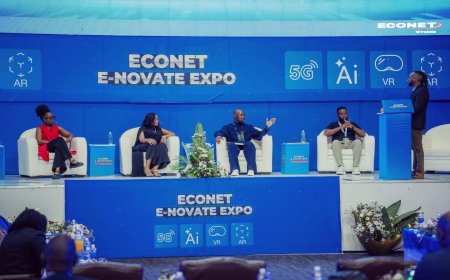
The official social media preview, which highlighted a powerful roster of “visionaries and practitioners,” set the stage for a day of rigorous debate. The Harare International Conference Centre’s main hall was consistently packed as attendees engaged with the core themes promised: the practicalities of smart cities, the urgent imperative of data sovereignty, and the ethical frameworks needed for artificial intelligence.
The tone was set early by Dr. Anya Chetty, a data governance expert from the African Union’s Digital Transformation Agency, whose keynote was a clarion call for structural change. “Our data is our new natural resource,” she stated, echoing a central Expo theme. “But for too long, it has been extracted, processed, and monetized in foreign silos, creating value elsewhere. Building our own cloud infrastructure and data hubs, as championed by leaders like Econet, isn’t just a technical decision; it is an act of economic and strategic self-determination.”
This concept of “digital sovereignty” moved from theory to tangible roadmap during a powerhouse panel titled “The Architecture of Autonomy: Data, Cloud & AI.” The discussion, featuring a mix of policymakers, infrastructure CEOs, and security specialists, debated the delicate balance between openness and control, collaboration and independence. Concrete announcements emerged, including a memorandum of understanding between the Zimbabwe Data Protection Authority and a consortium of local telcos, including Econet, to establish certified, in-country data processing frameworks for financial and health tech innovators.
The “Smart Cities: Beyond the Hype” session, teased in the Expo’s promotional material, delivered a ground-breaking case study. The Mayor of Victoria Falls, in partnership with Econet’s IoT division and a local startup, presented “Project Mosi 2.0.” This initiative has deployed a network of sensors to monitor real-time water usage, manage smart street lighting, and track tourist flow in the iconic town. The pilot, lauded as a model for other African municipalities, has reportedly reduced municipal energy costs by 30% and improved utility revenue collection by 22% in six months. “A smart city is not about facial recognition and flying cars,” the Mayor asserted. “It is about using affordable, scalable technology to solve basic service delivery problems for our citizens.”
True to the Expo’s focus on entrepreneurship and investment, the afternoon’s “VC Pitchfire” showcased a curated selection of Series-A ready startups, all operating at the intersection of the day’s themes. The standout was Safiri Sentinel, a Kenyan logistics platform that uses its own continent-wide sensor network and proprietary AI to track and protect high-value cargo, offering real-time condition monitoring and predictive risk analysis. “We own our hardware stack and our data,” CEO Wairimu Kibe told investors. “That control allows us to guarantee security and compliance in a way no third-party platform can.” Industry whispers suggest the company secured multiple term sheet offers before leaving the stage.
A defining moment of ethical introspection came during the “AI for Good, Built Right” workshop. Developers, ethicists, and community advocates grappled with creating non-extractive AI. Using a live demo, a team from the University of Zimbabwe demonstrated a speech-to-text model trained exclusively on Shona and Ndebele language datasets, funded by a grant announced at last year’s Expo. The contrast in accuracy and cultural nuance compared to global models was stark, driving home the point that ethical AI begins with representative data.
As the formal sessions closed, the networking halls buzzed with the energy of connections made and deals nascent. The promise of the speaker lineup—to deliver not just inspiration but actionable insight—was fulfilled. The conversations were heavier, more technical, and more consequential than Day 1.
“Day 1 is about the ‘why,’” observed veteran tech analyst Tapiwa Gomo. “Day 2, as we’ve seen today, is about the ‘how, and at what cost, and who benefits?’ The Expo is proving its unique value by refusing to shy away from these difficult questions. The caliber of speakers has elevated the entire discourse, moving us from aspiration to architecture.”
Day 3 of the E-novate Expo 2025 concludes tomorrow, December 11, with a focus on the future of work, skills development, and the highly anticipated announcement of the overall Expo innovation champion.
About the Econet Wireless E-novate Expo:
The Econet Wireless E-novate Expo is Zimbabwe’s premier technology and innovation platform, designed to accelerate the growth of the digital economy. By convening leading speakers, pioneering startups, investors, and corporates, the Expo focuses on critical pillars including Entrepreneurship, Fintech, Artificial Intelligence, and Digital Infrastructure. It serves as a catalyst for investment, collaboration, and the development of sovereign, sustainable technological solutions for Africa.