Agentic AI Emerges as Strategic Enabler for Zimbabwe's Fintech Sector, Tackling Inclusion and Efficiency Challenges
 Francis
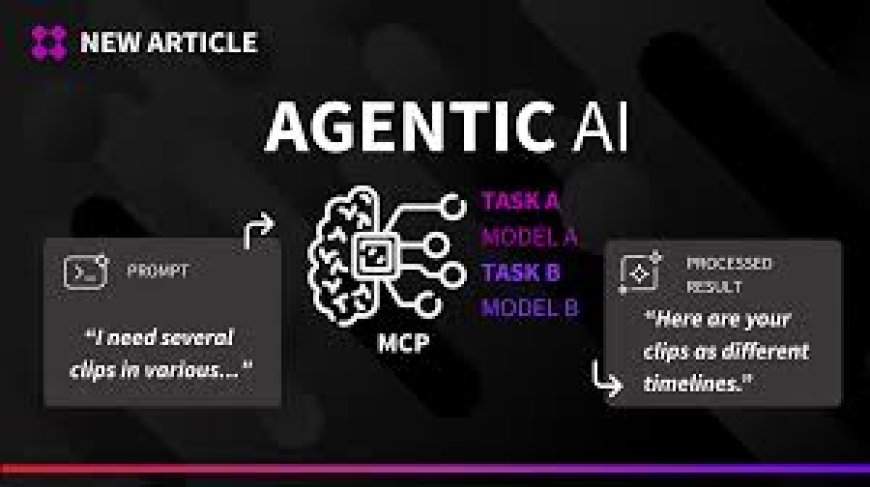
Zimbabwe's financial technology sector is now pioneering the adoption of a new technological paradigm: Agentic Artificial Intelligence. Moving beyond basic chatbots and analytics, local startups and financial institutions are deploying autonomous AI agents capable of complex planning, reasoning, and tool use. These systems are directly addressing core challenges in agricultural finance, cross-border commerce, and hyper-personalized customer service, positioning Zimbabwe at the forefront of a practical, agent-driven AI revolution in Africa.
Core Technological Shift: From Assistive to Autonomous
The evolution marks a significant leap. While traditional AI in fintech operates on a request-response model—such as a customer asking a chatbot for an account balance—Agentic AI systems are goal-oriented. They are given an objective, such as "structure a viable loan package for this smallholder farmer" or "optimize this SME's foreign currency procurement for the week." The agent then plans the necessary steps, executes them using connected tools (accessing weather data, market prices, regulatory databases), and adapts its approach based on real-time outcomes.
The shift is defined by moving from a powerful calculator to a proactive financial analyst that never sleeps. The agent does not just retrieve data; it interprets, makes sequential decisions, and completes multi-stage workflows. For a market navigating chronic volatility, the ability to autonomously monitor conditions and execute pre-authorized financial actions is transformative.
Primary Use Cases in Deployment
Industry analysis points to three primary domains where Agentic AI is moving from pilot to production in Zimbabwe:
-
Dynamic Agricultural Finance & Insurance: Agritech firms are embedding AI agents into their digital platforms. For smallholder farmers, an agent can now autonomously analyze satellite imagery, local soil moisture reports, and commodity futures to recommend the optimal time to request a crop input loan or to trigger a parametric insurance payout against drought—all without human initiation. This allows the agent to act as a proactive financial steward for the farmer. It can submit loan applications, negotiate micro-insurance terms from multiple providers, and arrange logistics for input delivery based on its predictive models.
-
Intelligent Cross-Border Trade Facilitation: For SMEs engaged in import/export, currency procurement and compliance are major hurdles. Agentic AI systems are being deployed to manage these complex, multi-party processes. An agent can be tasked with sourcing the most cost-effective USD or ZAR for a shipment. It will then autonomously query multiple authorized forex platforms, submit required regulatory paperwork to the Reserve Bank of Zimbabwe's systems, execute the trade upon meeting its price target, and update the company's ERP and logistics software. This reduces delays and maximizes value in a fiercely competitive market.
-
Context-Aware Customer Operations & Fraud Mitigation: Banks are moving beyond simple rule-based fraud alerts. Advanced single-agent systems with persistent memory now monitor individual customer transaction patterns across months. They can distinguish between a legitimate unusual payment and a likely fraudulent action, initiating a secure, context-aware verification process. On the service side, these agents can handle entire complex processes—like disputing a card transaction—by gathering evidence, filing claims with the network, and providing status updates, significantly boosting operational efficiency.
Architectural Foundations and Challenges
The deployment of these systems relies on a specialized technology stack. Developers are leveraging Large Language Models (LLMs) as the core reasoning engines, augmented with Retrieval-Augmented Generation (RAG). RAG allows agents to pull from private, up-to-date knowledge bases—such as the latest monetary policy statements or exchange control regulations—ensuring actions are based on accurate, current information rather than the LLM's static training data.
However, significant barriers persist. The computational cost of running these agentic systems is non-trivial, and there is a severe shortage of engineers skilled in orchestrating LLM reasoning, tool-use frameworks, and secure agent-to-agent communication. Furthermore, the regulatory environment, particularly concerning data privacy and autonomous decision-making in financial services, remains a grey area, requiring close engagement with the Reserve Bank of Zimbabwe.
Strategic Outlook
The strategic imperative for Zimbabwe's fintech sector is clear. In an economic environment where agility and precision are paramount, Agentic AI offers a competitive edge in risk assessment, operational efficiency, and customer intimacy. While large-scale, multi-agent ecosystems remain on the horizon, the current focus on robust, single-agent solutions for specific high-value problems is delivering measurable ROI.
The narrative in Africa is often about leapfrogging legacy systems. With Agentic AI, Zimbabwe's fintech players are not just adopting new technology; they are architecting the agile, intelligent, and autonomous financial infrastructure required for the continent's next phase of digital economic growth.