
Two-Track Triumph: Zimbabwe's National Strategy Champions Project Management as a Strategic Asset
 Francis

In a definitive declaration of strategic intent, the Zimbabwean government has elevated the discipline of project management to the status of a core national asset essential to achieving Vision 2030. The pronouncement, made by the Minister of Skills Audit and Development, Honourable Professor Paul Mavima, reframes project managers from implementers to primary strategists and stewards of national development.
By Francis S. Bingandadi Editor FinTech Review.Africa
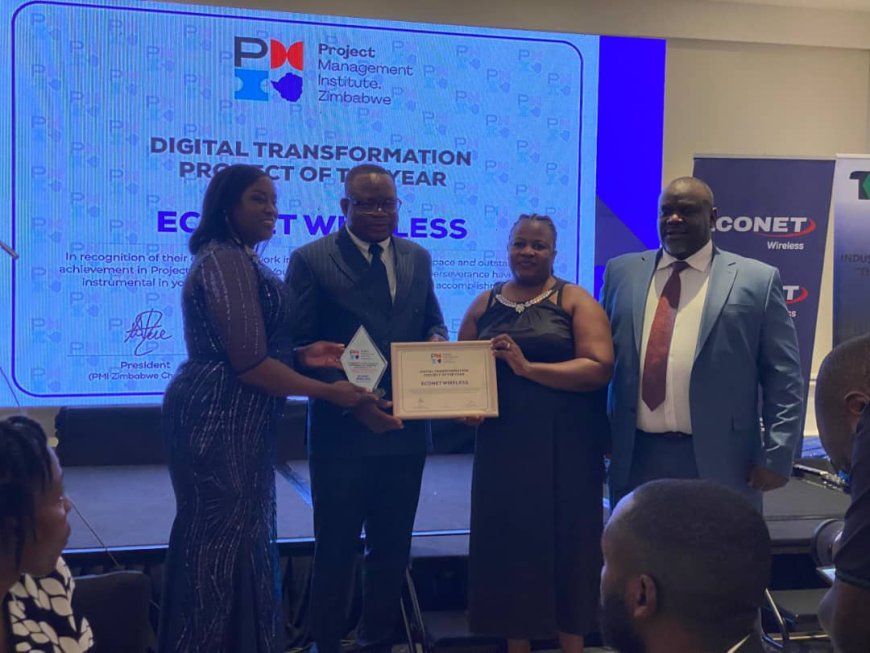
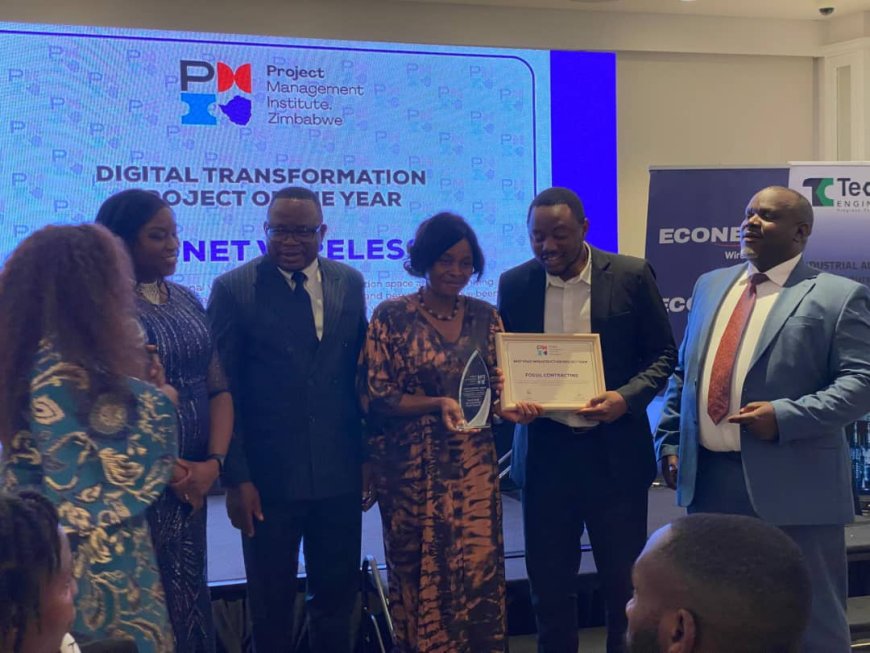
Speaking at the prestigious Project Management Symposium and Awards Dinner 2025 at the Hyatt Regency, Meikles Hotel, Professor Mavima anchored his vision on the symposium's resonant theme: “Celebrating Project Impact: Honouring Champions of Progress and Resilience”.
"In the pursuit of Vision 2030... project management can no longer be viewed as a peripheral function," the Minister declared, outlining a comprehensive roadmap for the profession's future. "It has become a strategic national asset, central to the conversion of policy into measurable development outcomes."
A Foundation of Proven Delivery
Minister Mavima’s strategy is not built on aspiration alone but is anchored in tangible national achievements delivered through rigorous project execution. He highlighted two flagship projects as evidence of concept:
The Harare-Beitbridge Highway Upgrade: Cited as a benchmark for structured planning, ethical governance, and efficient delivery, this infrastructure project is credited with unlocking significant economic and regional trade gains.
Hwange Power Station Units 7 and 8: Lauded as a national milestone in resilience, the successful commissioning of these units demonstrates Zimbabwe’s capacity to deliver large-scale, technically complex projects that enhance energy security and propel industrial growth.
"The success of NDS 2 rests heavily on the consistent application of excellent, ethical, and globally aligned project management competencies," the Minister emphasized, connecting past successes to future strategy.
Key Strategic Pillars for the NDS 2 Era
With the next five-year National Development Strategy (NDS 2) for 2026-2030 on the horizon, Professor Mavima outlined critical areas where project management must evolve to meet national ambitions:
Technological Integration: The Minister mandated the integration of Artificial Intelligence (AI), predictive analytics, and digital governance tools into project workflows to strengthen planning accuracy and enhance monitoring and control.
Cybersecurity as a Core Competency: Recognizing the expanded threat landscape of digitized projects, he called for the institutionalization of strong cybersecurity frameworks and the embedding of data integrity principles from project inception.
Elevating the Strategic PMO: A central directive is the prioritization of strengthening Project Management Offices (PMOs) across government and industry. These offices must evolve into "strategic centres of excellence," acting as guardians of standards, ethics, and national interests to ensure resource utilization and strategic alignment.
Public-Private Partnership: Minister Mavima formally proposed a renewed partnership with the PMI Zimbabwe Chapter to co-develop national standards, strengthen public sector capacity, and expand mentorship pathways for emerging leaders.
An Expert's Profile: From Academia to the Apex of Policy
The architect of this national strategy brings significant academic and administrative heft to the role. Professor Paul Mavima holds a PhD in Public Administration and Policy from Florida State University. His career spans academia, including posts as an Assistant and Associate Professor in the United States, and key government roles in Zimbabwe, having previously served as Minister of Primary and Secondary Education and Minister of Public Service, Labour and Social Welfare.
His scholarly background informs a vision for project management that is both rigorous and transformative, viewing it as the essential engine that "translates vision into value".