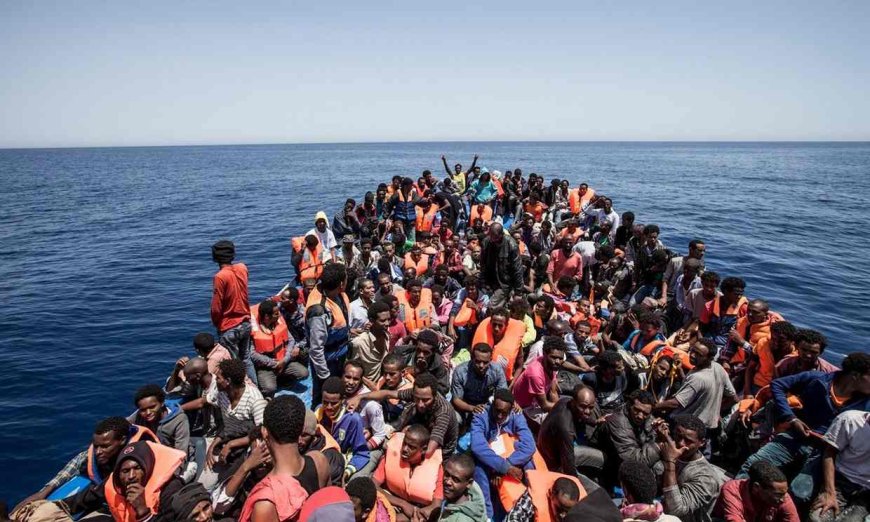
GENEVA — Fresh data from the UN refugee agency reveals that more than 5 million refugees and asylum‑seekers are now sheltering across two dozen African countries, with the war in Sudan single‑handedly driving the continent’s fastest‑growing displacement crisis. Figures compiled by UNHCR and national governments show that Chad, Uganda, Ethiopia and South Sudan have absorbed hundreds of thousands of new arrivals in the past 12 months, pushing local host communities and humanitarian budgets to breaking point.
The most staggering increase is recorded in Chad, where Sudanese refugees fleeing the paramilitary Rapid Support Forces’ offensive have reached 1.35 million as of April 2026. Monthly updates in the dataset show the number climbing from 1.23 million in May 2025 to more than 1.35 million by early 2026, an average of nearly 10,000 new arrivals every week. Chadian authorities and UNHCR have repeatedly warned that camps along the border are overwhelmed, with water and food rations cut repeatedly due to underfunding.
Uganda, already one of the world’s most generous refugee‑hosting nations, now shelters 1.04 million South Sudanese refugees and more than 650,000 Congolese from the Democratic Republic of the Congo, according to the latest figures from the Office of the Prime Minister. The South Sudanese population alone grew from 1.0 million in mid‑2025 to over 1.04 million by March 2026, despite peace efforts in Juba. Congolese arrivals increased by nearly 40,000 over the same period, driven by renewed militia violence in Ituri and North Kivu.
Ethiopia’s refugee burden remains enormous despite recent efforts to stabilise its own internal conflicts. The data show Ethiopia hosting 484,000 South Sudanese, 360,000 Somalis and 170,000 Eritreans as of the first quarter of 2026. In addition, Ethiopia continues to shelter more than 154,000 Sudanese who fled the RSF‑army war, with that number rising steadily from 144,000 in June 2025. The presence of Sudanese refugees adds a volatile layer to Ethiopia’s already fragile northern border regions.
Sudan itself hosts 638,000 South Sudanese refugees, most of whom have lived in camps for more than a decade. The dataset, compiled from government and UNHCR sources, records a slight uptick in that population since 2025, as some South Sudanese who had returned home were again pushed back across the border by food insecurity and localised fighting. Sudan’s own internally displaced now number more than 9 million, but the focus of the UNHCR tables remains on cross‑border caseloads.
In the Great Lakes region, the Democratic Republic of the Congo continues to be both a major source and a host of refugees. The DRC hosts 267,000 refugees from the Central African Republic, 197,000 from Rwanda, 56,700 from South Sudan and 46,800 from Burundi, according to the latest monthly figures. At the same time, Congolese asylum‑seekers pour into Uganda, Zambia and Burundi. The total number of Congolese refugees in neighbouring countries exceeds 1.2 million, making it Africa’s second‑largest refugee‑producing crisis after Sudan.
Kenya’s refugee population has remained stubbornly high, with the Dadaab and Kakuma camps holding 459,000 Somalis, 203,000 South Sudanese and 66,000 Congolese as of February 2026. The government’s repeated efforts to close Dadaab have been stalled by international pressure and the lack of safe return conditions in Somalia. The data also show 34,600 Burundians and 34,300 Sudanese living in Kenya, mostly in urban centres.
Burundi, which has emerged from civil war but remains fragile, hosts 112,000 Congolese asylum‑seekers and 1,000 Rwandans, according to a March 2026 update. Most Congolese arrived after 2023, fleeing M23 and other rebel activity. Burundi’s own citizens have also sought refuge abroad: more than 50,000 Burundians are registered as refugees in Rwanda, and another 46,000 in Tanzania, the data show.
Tanzania’s long‑standing refugee camps in Kigoma region still house 103,700 Burundians and 87,000 Congolese, though the Burundian number has been slowly declining as voluntary returns continue. The government has maintained a policy of encampment and does not grant refugees the right to work, leading to persistent tensions with donors. The most recent November 2025 figures show a slight drop in Congolese numbers, possibly due to secondary movements.
In West Africa, the Sahel crisis is reflected in growing refugee numbers. Mali’s instability has pushed 126,000 Malians into Niger and 127,000 into Burkina Faso, with the latter number doubling in the past year as jihadist groups expand. Burkina Faso itself has become a host for 40,000 Malians, while its own citizens have fled to Togo (42,000), Ghana (13,000) and Benin (11,000). The data show a steady month‑on‑month increase in these caseloads throughout 2025.
Smaller but significant flows include Eritrean refugees in Ethiopia (170,000), Djibouti (14,000) and Sudan (5,400), despite the war. The dataset also records 14,000 Somalis in Djibouti and 5,300 Somali asylum‑seekers in Zambia, reflecting the diaspora’s spread across the continent. Yemeni refugees, fleeing their country’s decade‑long war, are present in Djibouti (3,900) and Ethiopia (2,500), though the numbers have stagnated as the Horn receives fewer boats.
Humanitarian officials note that the 5‑million‑plus figure is almost certainly an undercount, as registration systems have collapsed in active conflict zones. The data also omit most internally displaced persons, who number more than 35 million across Africa. With no end in sight to the Sudan war and fresh clashes erupting in eastern DRC, the UNHCR projects that cross‑border refugee numbers could exceed 6 million by the end of 2026, straining a humanitarian system already operating at its limits.

 Francis