
Youtube PlaceholderHow Agentic AI is Rewiring the Mobile Landscape
 Francis
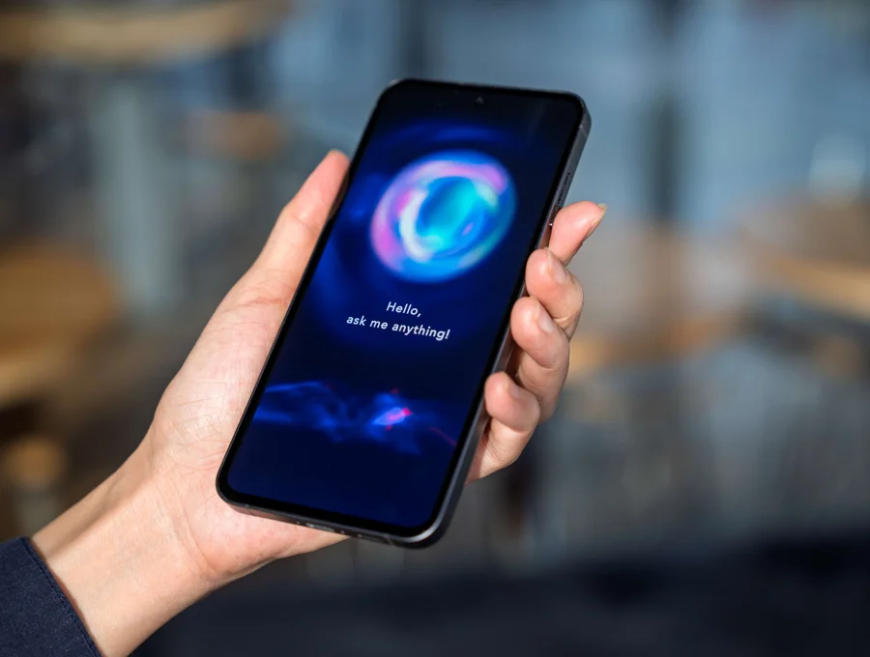
For over a decade, the smartphone has been defined by a single, static paradigm: the "App Grid." It is a digital filing cabinet of isolated applications, each requiring manual human operation, visual navigation and physical taps. But if you look closely at the recent launch of the Samsung Galaxy S26 – explicitly billed by its creators as the world’s first "agentic AI phone" – you are witnessing the death of the app grid.
We have reached a definitive, structural inflection point in mobile computing. Virtual assistants are evolving from conversational interfaces into true agentic systems capable of coordinating and executing multi-step workflows.
While early consumer demonstrations – such as Google's Gemini autonomously opening DoorDash, building a cart and waiting for your final tap or booking an Uber in the background while you read an email – might feel like incremental conveniences, they point to a much deeper architectural shift. The mobile operating system is no longer just a container for isolated apps; it is becoming an active orchestration layer.
Meanwhile, Apple’s highly-publicised struggles to overhaul Siri, resulting in delayed hardware roadmaps through late 2026, highlight just how difficult – and how urgent – this transition is. The gap between the legacy "smartphone" and the new "agentic phone" is widening at breakneck speed.
As technology leaders, we must look past the consumer hype and understand the profound market and architectural implications of this transition.
Moving from 'answer engines' to 'action engines'
The previous era of generative AI was defined by the 'answer engine'. You asked a chatbot a question and it gave you synthesised text. It was a parlour trick of immense scale, but it lacked utility. You still had to take that information, open a separate application, input your payment details and execute the task yourself.
The agentic era introduces the 'action engine'. The AI no longer just retrieves information; it is granted the agency to act on your behalf across different environments. You don't open a ride-sharing app and check prices; you tell the OS, "get me a ride to the airport". The OS-level agent translates that intent, negotiates with third-party APIs in the background, applies your payment credentials and confirms the booking. The mobile device shifts from a passive tool you operate to an active proxy that works for you.
Reshaping the mobile UX and app ecosystem
This transition fundamentally reshapes platform competition and destroys traditional mobile UX. The user journey of navigating a graphical user interface (GUI) is being bypassed entirely.
For the app ecosystem, this is a seismic, existential disruption. If users stop opening standalone applications – and instead interact exclusively through a multi-agent stack at the OS level (like the S26 seamlessly routing tasks between Gemini, Perplexity and local models) – the value of a sleek app interface plummets. Brand visibility drops. In-app advertising models fracture.
To survive, developers and enterprises must rethink their software architecture. Future mobile applications will act more like "headless" services – APIs and data streams designed to be discovered, negotiated with and consumed by the OS agent, rather than by human thumbs. The platforms that win will be those that offer the most frictionless, standardised orchestration layer for these agents to operate within.
Compute at the edge
To execute these complex, autonomous workflows securely, you cannot rely entirely on cloud round-trips. Latency kills the agentic experience. If an agent takes five seconds to "think" about routing a request between apps, the human will just do it themselves.
This is why a powerful, dedicated AI chip in each device is non-negotiable. The transition to agentic mobile requires massive on-device inference capabilities driven by advanced Neural Processing Units (NPUs), like the Snapdragon 8 Elite Gen 5 powering this new wave of hardware. Local processing ensures that when the agent interprets a command, the decision-making happens at the edge – in milliseconds.
Furthermore, keeping compute on the device is the only way to process highly sensitive personal context without exposing the user to unacceptable privacy risks or bandwidth bottlenecks.
Powering experiences with the invisible infrastructure
Even with the most advanced NPUs and the smartest foundational models, an agentic system is entirely dependent on the quality of its data infrastructure. If an agent is going to execute financial transactions, book travel or manage enterprise workflows on a user's behalf, it cannot operate on stale, siloed or generic data.
To act safely and accurately, agents require a pristine data pipeline characterised by three non-negotiable traits:
Real-time context: Batch processing is obsolete in an agentic world. An agent cannot make a decision based on data synced from a warehouse four hours ago. It must know the user's exact state, location and intent in the millisecond the prompt is given.
Enriched data: Raw event logs are useless to an action engine. The agent needs synthesised, enriched profiles to understand nuanced preferences. It needs to know not just that you buy coffee, but that you prefer a specific local shop, have a dairy allergy and usually use a specific corporate card on weekdays. This context must travel with the data.
Consented architecture: This is the ultimate gatekeeper. When AI acts autonomously, governance is paramount. The underlying data infrastructure must strictly enforce consent and privacy policies natively. If an agent accidentally utilises opted-out PII (Personally Identifiable Information) to execute a task, the brand faces catastrophic regulatory and reputational damage. The data fed to the agent must be pre-cleared, consented and governed before the model ever touches it.
Mobile strategy being rethought and evolving
For enterprises and developers, the arrival of agentic mobile platforms is a blaring wake-up call. Mobile is no longer a presentation layer; it is becoming workflow-driven.
If your digital strategy relies entirely on users downloading your app, navigating your menus and viewing your banners, you are building for a paradigm that is rapidly sunsetting. Enterprises must pivot to building intelligent, API-first services backed by real-time, consented data architectures that can seamlessly plug into these new mobile orchestration layers.
The companies that dominate the next decade will not be the ones with the most downloaded apps in the App Store; they will be the ones whose data, context and services are the easiest for the machines to orchestrate.
Source: https://aimagazine.com