
Google: The Dual Path Race to Commercial Quantum Computing
 Francis
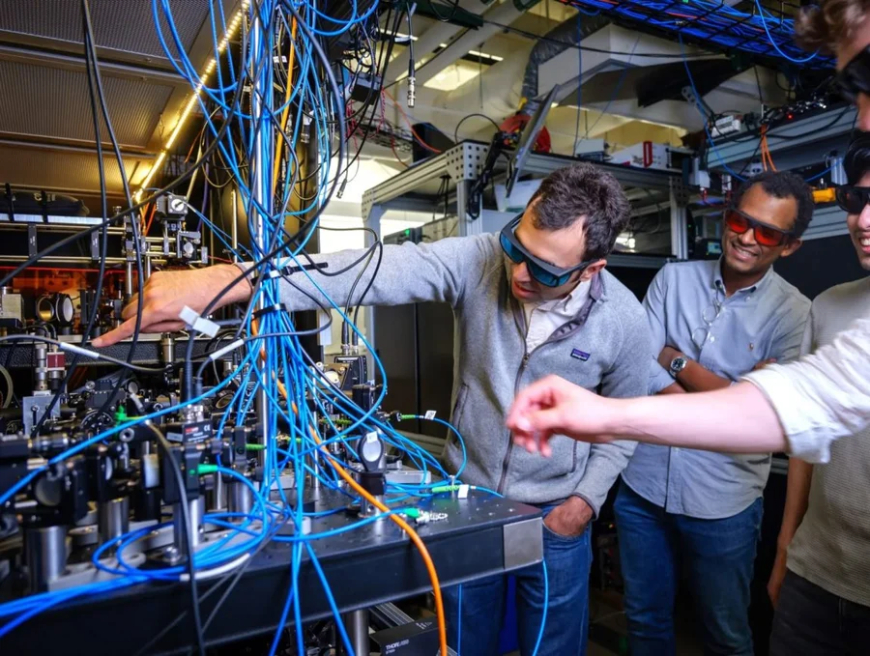
Google Quantum AI team is investing in superconducting qubits & neutral atoms to double its odds in the race to build commercially viable quantum computers
Neutral atom quantum computing is a second major addition to Google Quantum AI, as the tech giant bolsters its quantum portfolio.
This new approach uses individual atoms as the basic computing units, known as qubits.
Solidifying its position as a lead runner, Google has diversified its strategy, by pursuing dual paths in the race to build a commercially viable quantum computer.
These distinct technologies are superconducting qubits and neutral atoms.
Both of these are vital to the future of quantum processing, but they currently excel in different areas, offering complementary strengths that could prove essential for advancing AI applications.
Superconducting qubits have successfully scaled to circuits with millions of gate and measurement cycles, with each step taking just a microsecond. They are effective at running a long, complex sequence of operations very quickly.
However, the major challenge is scaling the physical size of the computer to demonstrate architectures with tens of thousands of computing units.
"We are now increasingly confident that commercially relevant quantum computers based on superconducting technology will become available by the end of this decade," says Neven Hartmut, Founder and Lead of Google Quantum AI.
Dual platform quantum strategy
Neutral atoms are better at scale, hence they have already been scaled to arrays with about ten thousand qubits
They offer a flexible connectivity graph, which is useful for efficient algorithms and error-correcting codes.
They currently lag in speed as their cycle times are currently much slower, measured in milliseconds. The challenge is enabling them to perform long sequences of operations faster than the superconducting qubits.
The new neutral atoms programme will be led by Dr Adam Kaufman and is structured around three core pillars: quantum error correction, modelling and simulation and experimental hardware development.
This effort is also advanced through Google's collaboration with its portfolio company QuEra.
"I am thrilled to join Google's world-leading program in quantum computing, and to expand that leadership to a new and highly promising platform of neutral atoms," says Adam.
Accelerating quantum computing capabilities
The commitment to both technologies is a deliberate strategy by Google to accelerate quantum development.
Neven explains the benefit of this dual investment: "By advancing both, we cross-pollinate research and engineering breakthroughs and can deliver access to versatile platforms tailored to different types of problems."
The company is strategically positioning the new programme within a global hub for physics and engineering.
"By tapping into the incredible talent from institutions like CU Boulder, JILA and NIST Boulder, we are embedding our efforts within one of the most sophisticated physics and engineering ecosystems in the world," Neven continues.
This collaborative approach could accelerate breakthroughs that may eventually enhance machine learning capabilities and AI processing power through quantum advantage.
The dual-platform strategy positions Google to address different computational challenges, potentially opening new pathways for AI development that leverage quantum computing's unique properties across both superconducting and neutral atom systems.
Source: https://aimagazine.com