Powering the Future: South Africa Leads the Charge as Official Host of Africa Energy Indaba 2026
 Francis
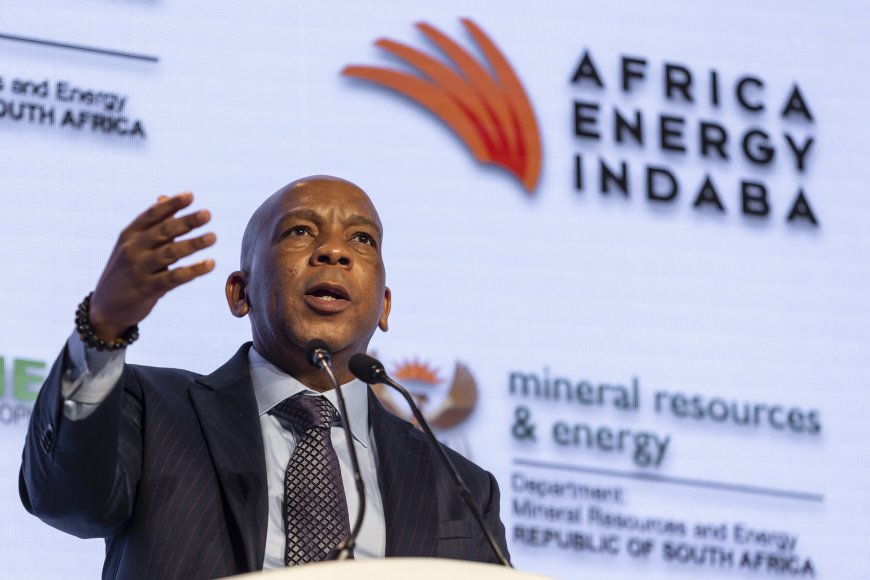
The Department of Electricity and Energy has officially stepped into its role as the government host for the 18th annual Africa Energy Indaba, set to take place from 3–5 March 2026 at the Cape Town International Convention Centre (CTICC). This landmark event arrives at a critical juncture for the continent, as African nations grapple with the dual challenges of achieving universal energy access while navigating a complex global transition toward cleaner power sources. By positioning South Africa at the helm of this summit, Minister Dr Kgosientsho Ramokgopa and Deputy Minister Graham Maré are signaling a renewed commitment to domestic stability and continental leadership.
The summit is designed as a high-stakes convergence of African energy leaders, policymakers, global investors, and development partners. Its primary mandate is to move beyond theoretical discussions and toward the practical advancement of energy security, regional integration, and large-scale investment. For South Africa, the Indaba serves as a strategic platform to showcase the "new era" of its energy sector—one defined by the separation of transmission entities, the expansion of the renewable energy grid, and the persistent pursuit of a diverse energy mix that includes nuclear and gas.
A Presidential Mandate for Infrastructure
The 2026 programme is anchored by significant executive participation. On Wednesday, 4 March, the President of the Republic of South Africa, Cyril Ramaphosa, is scheduled to deliver a keynote address following a formal introduction by the Department. This high-level endorsement underscores the government's view of energy as the bedrock of economic recovery. The President’s presence is expected to provide assurance to international markets regarding the continuity of South Africa’s energy reforms and the long-term viability of the country’s independent power producer (IPP) frameworks.
Regional Integration and the Ten-Year Plan
A central pillar of the Indaba is the Ministerial Roundtable on the Africa Ten-Year Infrastructure Investment Plan for Cross-Border Interconnectivity (TYIIP). Minister Ramokgopa will lead this session, which focuses on the urgent need for a unified continental grid. The roundtable aims to:
Accelerate priority transmission projects to bridge the gap between energy-surplus and energy-deficit regions.
Mobilize public and private investment by creating standardized regulatory environments.
Improve project preparation, ensuring that infrastructure "blueprints" are bankable and ready for rapid implementation.
Nuclear Ambitions and Global Compacts
On the final day of the summit, the Department will pivot toward long-term baseload solutions. Minister Ramokgopa is slated to deliver a keynote at the Nuclear Forum, where he will participate in the formal Signing of the Declaration to Triple Global Nuclear Capacity by 2050 in partnership with the World Nuclear Association. This move solidifies South Africa’s stance that nuclear energy is a vital component of a low-carbon future. Simultaneously, the Minister will open Mission 300 Day, a collaborative effort with the World Bank, African Development Bank (AfDB), and the Rockefeller Foundation, focused on signing compact agreements to expand energy access to 300 million Africans by 2030.
Deep Dives into Social and Clean Energy
While the Minister focuses on large-scale infrastructure and nuclear policy, Deputy Minister Graham Maré will spearhead the "human" element of the energy transition. On 3 March, he will lead a Clean Cooking Deep Dive Session. This session addresses a critical yet often overlooked aspect of energy poverty: the health and environmental impact of traditional cooking fuels. By highlighting South Africa’s efforts to expand clean cooking solutions, the Deputy Minister aims to demonstrate how energy policy can directly improve the lives of vulnerable communities and reduce the domestic burden of respiratory illnesses.
The Indaba concludes with the South African Investment Forum, an intensive two-hour session dedicated to profiling specific, shovel-ready opportunities within the local energy sector. For the fintech and investment community, this represents the most tangible aspect of the summit—a chance to engage directly with the Department on the financial mechanisms, de-risking strategies, and "green" bonds that will fund the continent’s industrial rebirth.