
HARARE – Government has directed plant breeders and seed regulators to align on modernized testing and faster release protocols, warning that regulatory bottlenecks are hindering innovation needed to counter climate change.
Speaking at a two-day workshop on climate-smart crop varieties, Permanent Secretary in the Ministry of Agriculture, Mechanisation and Water Resources Development, Professor Obert Jiri, in a speech read on his behalf by Chief Director in the same Ministry, Dr. Dumisani Kutywayo, said Zimbabwe’s food security now depends on scientifically sound, climate-adapted seed reaching farmers faster.
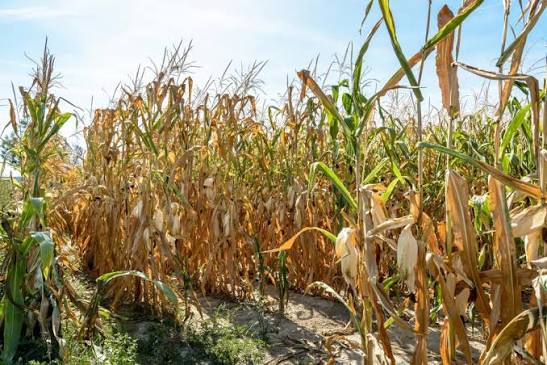
“We are witnessing increasing frequency and intensity of mid-season droughts, erratic rains, record-breaking heatwaves, and the rapid emergence of novel pests and diseases,” Prof. Jiri said, adding that, “A single dry spell at the flowering stage can wipe out months of investment for a smallholder farmer.
The workshop, themed “Accelerating Research & Development for Climate-Smart Crop Varieties”, has been convened ARC, HDC, CIMMYT, ZPBA, ZSA and NVRC members.
Plant breeders were told their duty is to generate “robust, statistically sound Data on Distinctness, Uniformity, and Stability (DUS), alongside Value for Cultivation and Use (VCU).” Data presented to NVRC must reflect multi-location, multi-season testing across diverse agro-ecological zones, “particularly stress-prone environments.”
Directives to Regulators.
Prof. Jiri said that, “Guardianship must not turn into administrative delay. In an era of rapid climate change, regulatory bottlenecks hinder innovation. If a high-yielding, drought-tolerant variety meets all scientific standards, the release process must be swift, transparent, and streamlined.”4 areas for alignment.
Harmonized regional frameworks such as SADC protocols to allow varieties to cross borders without redundant testing new criteria for evaluating climate-smart traits like drought resilience and nutrient-use efficiency
Digital Data Management Systems for integrity, transparency and rapid decision-making.
Government wants breeders to prioritize 4 traits: abiotic stress tolerance, biotic stress resistance to threats like Fall Armyworm and MLN, nutrient-use efficiency/early maturity, and biofortification with Vitamin A, Zinc and Iron. To do this, breeders must adopt Marker-Assisted Selection, Genomic Selection and Speed Breeding to cut variety development from 10-12 years to 4-6 years.
Share this Article
Francis
FintechReview Africa Contributor
More from Francis
Partnering for Resilience and Sustainable Development in Zimbabwe: Climate Resilience, Inclusion, Strategic Partnerships, Development Financing
6 days ago

Government Accelerates Groundwater Push as Zimbabwe Water Indaba Opens in Bulawayo
1 week ago

South African Procurement Law – A Continued State of Flux
1 week ago
Related Articles
The Tobacco Research Board (TRB)’s Commemorates 75th Anniversary Seed and Varieties Anniversary
1 year ago
At African Development Bank Group 2025 Annual Meetings, young agripreneurs transforming Africa’s Agriculture in spotlight
1 year ago
Integrating youth in Agrifood systems transformation in Zimbabwe
1 year ago
Food and Agriculture Organization (FAO), Southern African Development Community (SADC) Parliamentarians join forces to advance the Right to Food and agrifood systems transformation
1 year ago
Comments (0)
Sign in to join the conversation and leave a comment.
No comments yet. Be the first to share your thoughts!